
How Baros Maldives Guests Are Reviving Coral Reefs: A 1973 vs. 2025 Journey
A Legacy of Marine Conservation
September, 2025
Since opening in 1973, Baros Maldives has established itself not just as a luxury resort but as a guardian of marine ecosystems. Nestled in the North Male Atoll, this iconic property has witnessed both the devastating decline and the hopeful revival of coral reefs over five decades. Today, through innovative initiatives like the Coral Cube planting program and seagrass restoration, Baros offers guests an unprecedented opportunity to participate directly in marine conservation efforts led by expert marine biologists. This article documents the inspiring journey of how Baros guests are helping to revive fragile coral ecosystems, creating a blueprint for sustainable tourism that benefits both the environment and the visitor experience.


Section 1: The State of Coral Reefs - 1973 vs. 2025
The Pristine Reefs of 1973
When Baros first welcomed guests in 1973, the surrounding reefs were characterized by:
-
Vibrant coral coverage exceeding 70% in most areas
-
High biodiversity with abundant fish populations, sharks, and turtles
-
Minimal bleaching events and natural recovery cycles
-
Clear waters with excellent visibility supported by healthy reefs
The Challenged Ecosystems of 2025
Today, due to global warming and other environmental pressures, coral reefs face unprecedented challenges:
-
Mass bleaching events in 1998 and 2016 that affected 90% and 70% of Maldives corals respectively
-
Ocean acidification impacting coral growth rates and structural integrity
-
Increased frequency of climate-related stress events
-
Reduced biodiversity in many reef areas despite recovery efforts
Table: Comparison of Reef Health Indicators (1973 vs. 2025)
| Indicator | 1973 | 2025 |
|---|---|---|
| Coral Coverage | >70% | ~40-50% |
| Key Species Diversity | High | Moderate |
| Bleaching Events | Rare | Frequent |
| Recovery Potential | High | Moderate with assistance |
Section 2: The Coral Cube Initiative - A Step-by-Step Journey
Step 1: Coral Fragment Collection
The process begins with guests joining marine biologists to collect broken coral fragments from the seabed. These are pieces that would otherwise not survive on their own but still contain living coral polyps. Using sustainable collection methods that minimize impact on the reef, participants learn to identify viable fragments while understanding the ecological importance of each coral type .
Step 2: Preparation of Coral Cubes
The Coral Cubes are made from environmentally friendly materials formed from reusable wooden molds without any plastic elements. The concrete composition provides an ideal substrate for coral attachment while ensuring no harmful substances are released into the marine environment . Guests can have their initials imprinted on their Coral Cube for a small fee that goes toward producing more molds .
Step 3: Fragment Attachment
Under the guidance of marine biologists like Ambra Dumbria, Baros' resident expert, guests carefully attach the collected coral fragments to the Coral Cubes using special non-toxic adhesives . This hands-on experience connects participants directly to the restoration process while learning about coral biology and the critical role corals play in marine ecosystems .
Step 4: Strategic Placement
The newly prepared Coral Cubes are planted in predetermined areas of the house reef that need the most support . This strategic placement is based on extensive research by the Marine Centre team, considering factors such as water flow, sunlight exposure, and existing ecological communities. The cubes are positioned to create interconnected habitats that encourage natural colonization by fish and invertebrates .
Step 5: Monitoring and Growth
After placement, the Marine Centre team conducts regular monitoring of the coral cubes, cleaning them of algae and other growth inhibitors . Participants in the program receive semi-annual updates for two years showing the progress of their coral colonies, creating an ongoing connection to their conservation contribution . The growth rates vary depending on species and conditions, but the program has demonstrated impressive survival rates of approximately 74% according to similar programs in the Maldives .
Section 3: Seagrass Restoration - The Unsung Hero of Marine Ecosystems
While coral reefs often receive more attention, Baros recognizes the critical importance of seagrass meadows to overall marine health. The resort participates in broader restoration initiatives that align with the European Seagrass Restoration Workshop's mission to create a "European Seagrass Restoration Alliance" .
Seagrass restoration at Baros involves:
-
Protection of existing seagrass beds that provide nursery habitats for marine life
-
Transplantation efforts in areas where seagrass has declined
-
Integration with coral restoration to create comprehensive ecosystem recovery
-
Education for guests on the importance of seagrass in carbon sequestration and biodiversity support
These efforts acknowledge that coral and seagrass ecosystems are interconnected, with each supporting the health and resilience of the other .
Section 4: The Guest Experience - Participation in Conservation
Educational Component
The Coral Cube experience begins with education. Guests learn about:
-
The biology of corals and their role in marine ecosystems
-
Threats to reef health including climate change and human impacts
-
The science behind restoration techniques and why they work
-
Long-term conservation strategies beyond coral planting
Hands-On Participation
What sets the Baros program apart is the authentic hands-on experience:
-
Guests of all ages and swimming abilities can participate
-
The activity is complimentary as part of Baros' commitment to marine education
-
Participants create an "eco-footprint" through their direct contribution
-
The experience typically lasts 2-3 hours, making it accessible even for those with busy vacation schedules
Ongoing Connection
Through the semi-annual updates provided for two years, guests maintain a connection to their conservation contribution long after they've returned home . This extended engagement represents a sophisticated understanding of how to foster long-term environmental stewardship among visitors.

Section 5: The Marine Experts Behind the Program
The success of Baros' marine conservation efforts relies on the expertise of dedicated professionals like:
Ambra Dumbria - Dive Instructor & Marine Biologist who leads the coral restoration initiatives and educational programs
The Marine Centre Team - conducts routine maintenance of the coral frames and cubes, cleaning them of algae and other inhibitors to ensure optimal growth conditions
These experts bring scientific rigor to the programs while ensuring that guest participation remains safe, educational, and genuinely beneficial to the ecosystem. Their approach combines cutting-edge research with practical application, creating a model that other resorts are beginning to emulate .
Section 6: Measuring Impact and Future Commitments
Documented Success
To date, Baros and its guests have achieved:
-
480 coral frames sponsored through conservation initiatives
-
365 coral tables submerged since the program began in 2009
-
High survival rates for transplanted corals comparable to other leading programs in the Maldives that report 70-74% success
-
Enhanced biodiversity on the house reef with increased fish populations and other marine life
Future Directions
Looking ahead, Baros is committed to:
-
Expanding the Coral Lines Nursery project started in 2018, which uses rope nurseries to rehabilitate coral fragments before transplantation
-
Incorporating assisted evolution techniques to enhance coral resilience against climate stressors
-
Sharing knowledge with other tourism businesses to scale conservation efforts across the Maldives and beyond
-
Integrating more seagrass restoration into overall marine conservation programs
Table: Baros Marine Conservation Achievements and Goals
| Metric | Achievement to Date | Future Goal |
|---|---|---|
| Coral Frames Sponsored | 480 | 600+ by 2026 |
| Coral Tables Submerged | 365 | 400+ by 2026 |
| Survival Rate | ~70-74% | 80%+ with new techniques |
| Species Diversity | 15+ species | 20+ species |
Conclusion: Your Role in the Continuing Story
The journey of coral restoration at Baros Maldives represents a powerful model of how sustainable tourism can directly contribute to environmental conservation. By participating in the Coral Cube initiative or supporting seagrass restoration, guests become part of a story that stretches back to 1973 and forward toward a more sustainable future.
The contrast between the reefs of 1973 and those of 2025 reveals both challenging losses and hopeful developments. While climate change continues to threaten marine ecosystems, initiatives like those at Baros demonstrate that active intervention can make a meaningful difference in preserving and restoring these vital underwater landscapes.
As the resort continues to innovate and expand its marine conservation programs, it offers guests not just a luxury vacation experience, but an opportunity to leave a positive environmental legacy that will continue to grow long after they've returned home. Through education, participation, and ongoing engagement, Baros guests are indeed reviving coral reefs—one cube at a time.
Ready to become part of this conservation story? Learn more about Baros' marine conservation programs or book your stay following link below, or contact the Marine Centre team at [email protected].
Check Availability and PricesRelated Stories:
- Gili Lankanfushi Seagrass Meadow Conservation: Protecting the Maldives' Marine Ecosystem
- 7 Unforgettable Eco-Experiences at Vakkaru Maldives (Beyond Sunbathing)
- Sustainable Maldives Beaches: The Ultimate Eco-Friendly Travel Guide
- 10 Best Eco-Friendly Resorts in Maldives for Sustainable Luxury
- Baros vs Gili Lankanfushi: Luxury Paradise Comparison
- Signature Marine Experiences: Explore, Conserve & Dive at Coco Palm
- Top Adults-Only Resorts Maldives 2025: Secluded Luxury for Couples

2025 Maldives Resort Trends: What’s New for Multi-Generational Travel?
New Openings & Multi-Generational Family Travel Guide
Read More
Best Maldives Resort Offers & Packages
Find out more about the most unparalleled Maldives hotel deals and special rates, when Book Direct your next beach holiday
Read More
Maldives Hotel Reviews
Some of the best hotels and resorts in the Maldives are already included in this list, and the good part of them offers the best prices. We will constantly add new hotels
Read More
Maldives First Time Visitor Guide: Essential Tips & Insight
Welcome to our comprehensive guide for first-time visitors to the Maldives!
Read More
The Most Anticipated Openings in the Maldives 2025/26
Dive in to explore what makes these luxury Maldives openings 2025/26 so special
Read More
Maldives Liveaboards Guide: Itineraries, Tips & Best Boats
Plan your Maldives liveaboard trip with our expert guide! Compare itineraries, costs, and boats.
Read More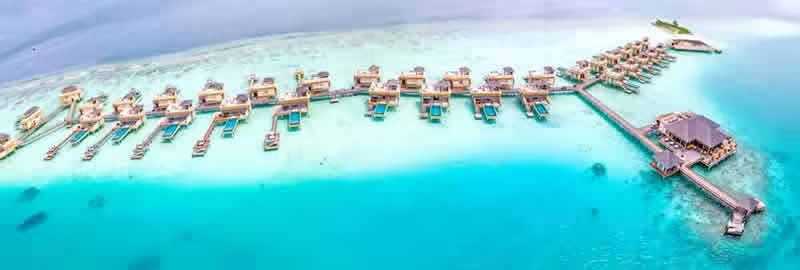
Maldives Luxury Guide
Here's the best of Maldives for luxury travellers. We've compiled the finest recommendations of places to stay, ranging from the most celebrated five-star resorts to luxurious private islands Read More
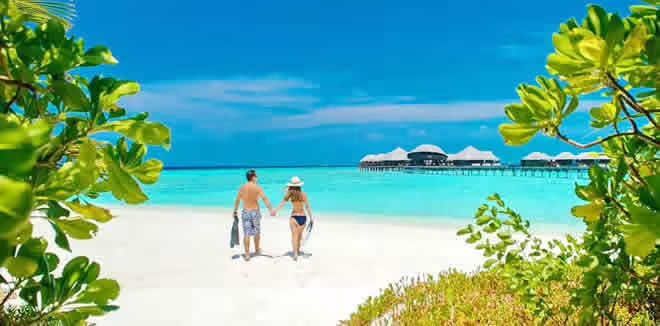
Maldives Romantic Guide
The ultimate ‘flop and drop' and honeymoon destination, the Maldives is the playground for the most amazing and finest utilization of each second of this extremely valuable and hopeful time with each other in tota Read More
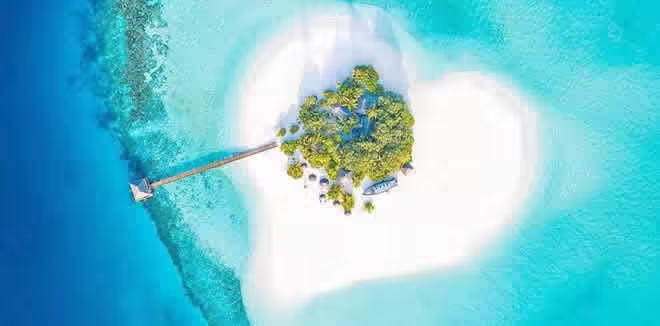
Maldives Budget Guide
Budget travellers choose Maldives as their destination of choice thanks to the variety of affordable stays Read More
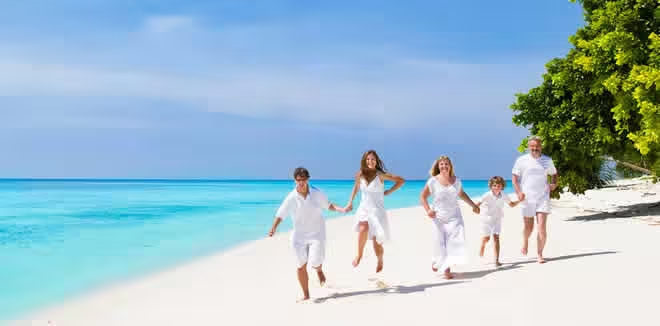
Maldives Family Guide
Maldives - a name that became synonymous with honeymooners' paradise in the tourism world, has slowly Read More

Maldives Diving Guide
The life of these paradise islands below the Indian Ocean's level is the main draw attracting thousands of divers Read More