
Beyond the Reef: Unveiling the Maldives' Endemic Wildlife
September, 2025
When we picture the Maldives, our minds typically conjure images of brilliant turquoise waters teeming with vibrant marine life and coral reefs. While this underwater paradise deserves its fame, the terrestrial ecosystems of these exotic islands hold their own astonishing secrets waiting to be discovered. Beyond the resort beaches and overwater villas exists a world of remarkable land-based endemic species and lush vegetation that tells a different story of biological diversity and cultural heritage.
The Maldives' local islands harbor unique ecological communities that have adapted to the specific conditions of these isolated atolls. From skinks scurrying through the undergrowth to elegant herons wading in mangrove forests, the land animals of the Maldives present an intriguing narrative of evolution and survival. Similarly, the native flora—including the culturally significant screw pines and coconut palms—forms an integral part of both the ecosystem and traditional Maldivian life.
This article invites you to look beyond the ocean's surface to appreciate the unsung terrestrial treasures that make the Maldives truly extraordinary. Whether you're an avid birdwatcher, a nature enthusiast, or a cultural explorer, understanding this lesser-known aspect of the islands will profoundly enrich your experience of this Indian Ocean paradise.


The Terrestrial Ecosystems of the Maldives
The Maldives archipelago consists of approximately 1,192 coral islands grouped into 26 atolls, forming a chain that stretches across the equator in the Indian Ocean. These islands are characterized by their low-lying coral formations, with an average ground-level elevation of just 1.5 meters (5 feet) above sea level, making them among the most vulnerable places on Earth to rising sea levels .
Despite the limited land area (less than 300 km²), the Maldives supports several distinct terrestrial habitats that host specialized communities of plants and animals. These include:
-
Beach crest vegetation: Slightly elevated areas above the high tide line dominated by hardy species like Scaevola taccada, Pemphis acidula, Tournefortia argentea, and Guettarda speciosa .
-
Inner island habitats: The most protected areas featuring coconut plantations and moist soils that allow the growth of understory trees such as Morinda citrifolia and Hibiscus tiliaceus .
-
Mangrove forests: Found in brackish or muddy areas, with fourteen species across ten genera native to the Maldives, including the fern Acrostichum aureum .
-
Human-modified areas: Including village gardens and agricultural plots where traditional plants like breadfruit and coconut palms thrive alongside introduced species.
The fragility of these ecosystems cannot be overstated. As development pressure increases, formerly uninhabited islands have been transformed, and many natural habitats have been severely threatened or destroyed during recent decades . This makes conservation and sustainable tourism practices increasingly important for preserving the Maldives' unique terrestrial biodiversity.
Endemic Mammals and Reptiles: Maldives' Unique Land Animals
While the Maldives is rightly famous for its marine life, its land animals, though less numerous, are equally fascinating from an ecological perspective. The mammalian fauna is particularly limited, with only a flying fox (Pteropus giganteus ariel) and a shrew species recognized as endemic mammals . These creatures have evolved in isolation, developing unique characteristics that distinguish them from their relatives elsewhere.
The reptilian community presents more diversity, with several species adapted to the specific conditions of the atolls:

Oriental Garden Lizard (Calotes versicolor)
Also known as the "bloodsucker" (despite being harmless to humans), this striking agamid lizard is one of the most conspicuous reptiles you'll encounter on the islands. Growing up to 37 cm (14.5 inches) including its tail, this species is known for its remarkable color-changing ability . During breeding season, males develop a bright red throat and head to attract mates and establish territories. Unlike many other lizards, the Oriental garden lizard cannot drop its tail as a defense mechanism, instead relying on its speed and camouflage to evade predators .
Geckos and Skinks
Several species of geckos and skinks inhabit the Maldives, often becoming familiar companions around human settlements:
-
White-spotted supple skink (Riopa albopunctata): These sleek, fast-moving lizards are often found in leaf litter and under debris.
-
House geckos: Frequently seen around buildings where they hunt insects attracted to lights. Their distinctive chirping calls feature prominently in Maldivian folklore, where they are believed to be truth-detectors—if a gecko vocalizes while someone is speaking, it confirms the truthfulness of their statement .
-
Wolf snakes and blind snakes: The Indian wolf snake (Lycodon aulicus) and brahminy blind snake (Ramphotyphlops braminus) are also present, though less frequently encountered.
Notable Land Animals of the Maldives
| Species | Description | Where to Find |
|---|---|---|
| Maldives Flying Fox (Pteropus giganteus ariel) | Endemic fruit bat subspecies, important for pollination | Forested areas on remote islands |
| Oriental Garden Lizard (Calotes versicolor) | Color-changing agamid, up to 37 cm long | Gardens, forests, and urban areas |
| White-spotted Supple Skink (Riopa albopunctata) | Small, fast-moving lizard with glossy scales | Under leaf litter and debris |
| House Geckos | Insect-eating lizards with distinctive calls | Buildings and lighted areas at night |
| Indian Wolf Snake (Lycodon aulicus) | Mildly venomous but harmless nocturnal snake | Forested areas and gardens |
These terrestrial creatures play vital roles in the island ecosystems, controlling insect populations, pollinating plants, and contributing to the overall ecological balance. Their adaptation to the unique conditions of the Maldives makes them particularly interesting to naturalists and wildlife enthusiasts.
Native Plants and Their Cultural Importance: More Than Just Scenery
The flora of the Maldives represents a fascinating blend of hardy native species and plants introduced by humans for food, medicine, and other practical purposes. Despite the challenging soil conditions—primarily sandy and saline—these plants thrive, creating the lush tropical landscapes that characterize the islands.

Screw Pines (Pandanus Species)
Among the most culturally significant plants in the Maldives is the screw pine, known locally as kashikeyo. Several Pandanus species grow in the Maldives, including Pandanus fosbergii, P. adduensis, P. hartmanii, P. karikayo, and P. maldivecus, though some are considered synonyms of the widespread Pandanus odorifer . These distinctive trees with their aerial prop roots and spiral leaf arrangements have served multiple purposes in Maldivian culture for centuries:
-
Traditional crafts: The leaves were historically used for weaving mats, baskets, hats, and roofing materials .
-
Culinary uses: The fruit is used to make a refreshing drink known as kashikeyo juice, prepared by boiling and blending the fruit pulp with water .
-
Medicinal applications: In traditional medicine, various parts of the plant are used for their purported health benefits, though scientific research on these properties remains limited .
The screw pine's cultural significance extends to special occasions, where it has traditionally been incorporated into wedding ceremonies and local festivals, symbolizing hospitality and the islands' bounty .
Coconut Palms (Cocos nucifera)
No plant is more iconic to tropical islands than the coconut palm, and in the Maldives, it represents far more than just picturesque scenery. These versatile trees provide:
-
Sustenance: Coconuts are used in various forms in Maldivian cuisine—from the water as a refreshing drink to the flesh used in curries, desserts, and coconut oil.
-
Building materials: The trunks are used in construction, while the leaves are woven into thatch for roofing.
-
Economic value: Historically, coconuts were an important trade commodity, and today they remain central to many local industries.
Breadfruit Trees (Artocarpus altilis)
Introduced to the Maldives centuries ago, breadfruit trees have become naturalized and now represent an important food security crop. The starchy fruits are roasted, fried, or boiled and serve as a staple food source, particularly on remote islands. During seasons of abundance, excess breadfruit is preserved through drying or fermentation, ensuring food availability throughout the year.
Other Notable Flora
The Maldives hosts approximately 260 vascular plant species that grow wild (either native or naturalized), with an additional 323 cultivated species . Among these, several play significant ecological and cultural roles:
-
Mangroves: Fourteen species across ten genera help stabilize shorelines and provide critical habitat for numerous species .
-
Coastal vegetation: Hardy species like Scaevola taccada and Pemphis acidula form natural barriers against erosion and storm surges.
-
Ornamental and medicinal plants: Various flowers, herbs, and shrubs are cultivated in village gardens for their beauty and practical applications.
The interconnection between plants and culture in the Maldives reflects a deep understanding of the local environment and a tradition of utilizing available resources sustainably. This botanical heritage represents an essential aspect of Maldivian identity that deserves recognition and preservation.

Birdwatching in Paradise: Herons, Tropicbirds, and Migratory Species
The Maldives' position in the Indian Ocean makes it an important stopping point for migratory birds and a permanent home for several resident species. With over 200 species recorded, including both native birds and migrants, the islands offer surprising opportunities for bird enthusiasts .
Endemic and Resident Birds
While the Maldives has no truly endemic bird species, it does host several subspecies found only in the archipelago, including:
-
Maldivian White-breasted Waterhen (Amaurornis phoenicurus)
-
Southern Maldivian Little Heron
-
Northern Maldivian Little Heron
-
Maldivian Pond Heron
-
Maldivian House Crow
These birds have evolved distinct characteristics adapted to the specific conditions of the Maldives, making them particularly interesting to ornithologists.
Other notable resident species include:
-
White Tern (Gygis alba): These elegant white birds are often seen on the southern islands where they nest in trees .
-
Crab-plover (Dromas ardeola): Unique wading birds that specialize in feeding on crabs and other crustaceans .
-
Lesser Frigatebird (Fregata ariel): Often seen soaring high above the islands with their distinctive silhouettes .
Migratory Visitors
The Maldives serves as a critical stopover and wintering ground for numerous Eurasian migratory birds. Between October and April, birdwatchers can observe many species that breed in northern Asia and Europe but winter in or pass through the Maldives:
-
Pacific Golden Plover (Pluvialis fulva)
-
Ruddy Turnstone (Arenaria interpres)
-
Various sandpipers and shanks including Common Sandpiper (Actitis hypoleucos) and Common Greenshank (Tringa nebularia)
-
Caspian Plover (Charadrius asiaticus) - accidental
Birdwatching Checklist for the Maldives
| Category | Species Examples | Best Time to View |
|---|---|---|
| Resident Species | White-breasted Waterhen, White Tern, Crab-plover | Year-round |
| Seasonal Breeders | Lesser Frigatebird, Audubon's Shearwater | Varies by species |
| Winter Migrants | Pacific Golden Plover, Ruddy Turnstone, Common Sandpiper | October-April |
| Accidental/Vagrant | Caspian Plover, Cotton Pygmy-goose, Ferruginous Duck | unpredictable |
Prime Birdwatching Locations
While birds can be spotted throughout the archipelago, some areas offer particularly good opportunities:
-
Wetlands and marshes: Attract waterbirds like herons, moorhens, and migratory shorebirds.
-
Uninhabited islands: Provide nesting sites for species like frigatebirds and terns.
-
Village peripheries: Where human activity often concentrates food resources for opportunistic species.
-
Mangrove forests: Support specialized bird communities and provide important foraging grounds.
For the best birdwatching experience, visit during the migration periods (April-May and September-October) when both wintering and passage migrants can be observed. Early morning and late afternoon typically offer the most activity, while the heat of the day tends to be quieter.
Practical Guides: DIY Birdwatching and Gecko-Spotting Adventures
Experiencing the terrestrial wildlife of the Maldives requires some knowledge and preparation. Here are practical guides to maximize your opportunities for observing these often-overlooked inhabitants.
Gecko-Spotting Guide
Geckos are among the most frequently encountered reptiles in the Maldives. To observe them:
-
Timing is crucial: Geckos are primarily nocturnal but can sometimes be seen during the day in shaded areas.
-
Check appropriate habitats: Look around outdoor lights where insects gather—geckos often wait here to hunt. Also check tree bark, rock walls, and the exterior of buildings.
-
Listen for calls: Many geckos produce distinctive chirping sounds, especially after dusk.
-
Respect their space: Observe without handling, as these delicate creatures can be easily stressed injured.
Interesting fact: According to Maldivian folklore, if a gecko vocalizes while someone is speaking, it confirms the truthfulness of their statement .
Birdwatching Tips for Amateurs
You don't need to be an expert or have expensive equipment to enjoy birdwatching in the Maldives:
-
Start with the obvious: Begin your observation around water sources—ponds, marshes, and even puddles can attract drinking and bathing birds.
-
Bring binoculars: Even a simple pair will dramatically improve your ability to identify species.
-
Use field guides: Download a bird identification app or carry a regional field guide to help with recognition.
-
Keep a checklist: Record your sightings to create a personal log of your observations.
-
Join local experts: Many guesthouses can connect you with residents knowledgeable about local birdlife.
Ethical Wildlife Observation Practices
When observing wildlife in the Maldives, always follow these responsible practices:
-
Maintain distance: Avoid disturbing animals or altering their natural behavior.
-
Never feed wildlife: Human food can harm animals and create unhealthy dependencies.
-
Respect nesting areas: Especially during breeding seasons when birds are particularly vulnerable.
-
Leave no trace: Carry out all waste and avoid damaging habitats.
-
Support conservation: Choose eco-friendly accommodations and tour operators that prioritize environmental protection.
Conservation Challenges and Initiatives
The terrestrial ecosystems of the Maldives face significant threats, including habitat loss due to development, climate change impacts, and invasive species . Several conservation initiatives aim to address these challenges:
-
Protected areas: Some islands and reefs have been designated as conservation zones, though primarily focused on marine environments.
-
Species monitoring: Organizations like the Maldives Environmental Awareness Forum track populations of key species.
-
Community engagement: Programs that involve local residents in conservation efforts, recognizing their traditional knowledge and stake in preserving biodiversity.
Tourists can contribute to these efforts by choosing responsible tour operators, respecting wildlife guidelines, and supporting organizations working to protect the Maldives' unique terrestrial ecosystems.
Experiencing Authentic Maldives: Local Guesthouses and Cultural Immersion
To truly appreciate the terrestrial wonders of the Maldives, consider staying on local islands rather than exclusively at resort properties. This approach not only provides more opportunities to observe land-based wildlife but also offers authentic cultural experiences and direct economic benefits to communities.
Recommended Local Islands and Guesthouses
Several local islands have developed infrastructure for tourists while maintaining their authentic character:
-
Mahibadhoo: Located in Ari Atoll, this island offers several guesthouses and easy access to both terrestrial and marine environments. The island's vegetation supports diverse birdlife and reptiles, while its community maintains strong traditions connected to the local ecosystem.
-
Thulusdhoo: Known for its surf breaks and cultural sites, this island provides opportunities to observe both wildlife and traditional Maldivian crafts.
-
Fuvahmulah: This unique single-island atoll features freshwater lakes and diverse habitats that support unusual species concentrations, including numerous bird species.
When selecting guesthouses, look for those that:
-
Employ local guides knowledgeable about wildlife
-
Incorporate traditional architectural elements and landscaping
-
Offer meals featuring local ingredients and traditional recipes
-
Demonstrate environmental responsibility through waste management and energy practices
Cultural Experiences Connected to Nature
Engaging with local culture provides deeper insight into the relationship between Maldivians and their natural environment:
-
Traditional crafts: Learn about weaving with palm leaves and screw pine materials, a skill passed down through generations .
-
Culinary traditions: Participate in preparing dishes using native ingredients like breadfruit, coconut, and screw pine.
-
Nature folklore: Discover stories and beliefs related to local wildlife, such as the gecko's truth-verifying reputation .
-
Agricultural practices: Visit local gardens to see how traditional crops are cultivated in challenging conditions.
Combining Marine and Terrestrial Exploration
While this article focuses on land-based nature, the most complete Maldivian experience combines both marine and terrestrial environments:
-
Morning: Birdwatching or nature walk on local islands
-
Afternoon: Snorkeling or diving in nearby reefs
-
Evening: Learning about traditional uses of native plants or observing nocturnal wildlife
This balanced approach provides a comprehensive understanding of the Maldives' ecological richness and the interconnectedness of its marine and terrestrial systems.
Conclusion: Preserving Paradise's Lesser-Known Treasures
The Maldives offers far more than the stunning marine environments for which it is rightly famous. Its land-based ecosystems host unique species and ecological communities that have adapted to the specific conditions of these isolated islands. From color-changing lizards to culturally significant plants, these terrestrial wonders deserve attention and protection.
As tourism in the Maldives continues to evolve, opportunities to experience and appreciate this lesser-known aspect of the islands are expanding. By choosing to explore beyond the resort beaches and engage with local communities, visitors can develop a more complete understanding of the Maldives' natural heritage while supporting conservation efforts and sustainable development.
The future of the Maldives' unique terrestrial biodiversity depends on balanced approaches to development that recognize the value of these ecosystems—both for their ecological functions and their cultural significance. Through responsible tourism, scientific research, and community engagement, these unsung elements of the Maldivian environment can be preserved for future generations to appreciate and study.
Whether you're spotting geckos on a guesthouse wall, sampling screw pine juice, or marveling at migratory birds resting during their long journeys, these terrestrial experiences will deepen your connection to this remarkable archipelago and provide memories that complement—and may even rival—those of its famous underwater world.
Image: A Maldivian white tern against a tropical backdrop—one of the many avian wonders found on the islands.
Related Stories:
- Maldives Marine Life
- From Grey Herons to Asian Koels: Discover birds of the Maldives with Cinnamon Hotels & Resorts
- 10 Best Beaches in the Maldives
- 10 Most Sustainable Luxury Resorts in Maldives
- What Luxury Travelers Demand in the Maldives for 2025
- Best Time to Dive Maldives: A Seasonal Guide for Megafauna
- Dive Into Luxury: How Halaveli Maldives' Green Globe Platinum Certification Protects Marine Life

2025 Maldives Resort Trends: What’s New for Multi-Generational Travel?
New Openings & Multi-Generational Family Travel Guide
Read More
Best Maldives Resort Offers & Packages
Find out more about the most unparalleled Maldives hotel deals and special rates, when Book Direct your next beach holiday
Read More
Maldives Hotel Reviews
Some of the best hotels and resorts in the Maldives are already included in this list, and the good part of them offers the best prices. We will constantly add new hotels
Read More
Maldives First Time Visitor Guide: Essential Tips & Insight
Welcome to our comprehensive guide for first-time visitors to the Maldives!
Read More
The Most Anticipated Openings in the Maldives 2025/26
Dive in to explore what makes these luxury Maldives openings 2025/26 so special
Read More
Maldives Liveaboards Guide: Itineraries, Tips & Best Boats
Plan your Maldives liveaboard trip with our expert guide! Compare itineraries, costs, and boats.
Read More
Maldives Luxury Guide
Here's the best of Maldives for luxury travellers. We've compiled the finest recommendations of places to stay, ranging from the most celebrated five-star resorts to luxurious private islands Read More
Maldives Romantic Guide
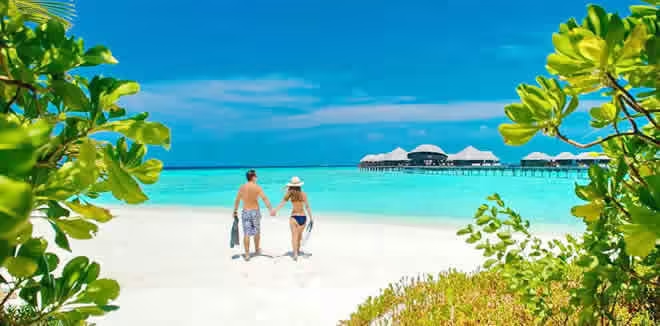
The ultimate ‘flop and drop' and honeymoon destination, the Maldives is the playground for the most amazing and finest utilization of each second of this extremely valuable and hopeful time with each other in tota Read More
Maldives Budget Guide
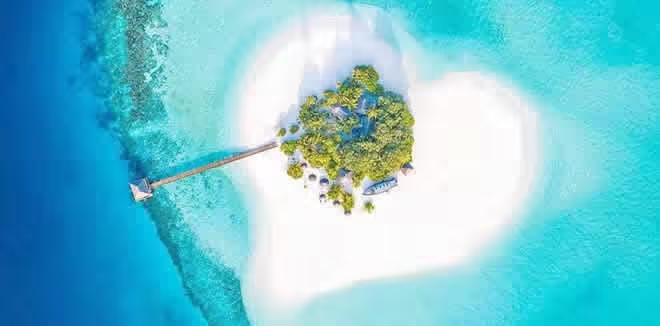
Budget travellers choose Maldives as their destination of choice thanks to the variety of affordable stays Read More

Maldives Family Guide
Maldives - a name that became synonymous with honeymooners' paradise in the tourism world, has slowly Read More

Maldives Diving Guide
The life of these paradise islands below the Indian Ocean's level is the main draw attracting thousands of divers Read More