
Tubbataha Diving: Ultimate Guide to Season, Liveaboards & Marine Life (2026)


May, 2026
Far from any shoreline, in the middle of the Sulu Sea, lies a remote atoll system that has become the stuff of diving legend. Tubbataha Reefs Natural Park—a UNESCO World Heritage Site and Ramsar wetland of international importance—rises from the abyss like an oasis, drawing in some of the highest concentrations of marine megafauna on Earth. Vast coral walls plunge hundreds of meters into the blue. Schools of barracuda swirl in mesmerizing vortexes. Sharks cruise the drop-offs with quiet confidence, and whale sharks glide past like silent submarines. It is a place shaped as much by absence as by abundance: absent of development, crowds, and constant human pressure, yet overflowing with life.
Accessible only by liveaboard for a brief window each year, Tubbataha represents something increasingly rare in today's oceans: a reef system that functions largely as nature intended. This guide covers everything you need to plan your expedition.


Tubbataha Diving Season: When to Visit for the Best Visibility & Weather
Tubbataha operates on nature's schedule. The park is officially open for diving only between mid-March and mid-June—a narrow three-month window when the Sulu Sea calms and the southwest monsoon has yet to arrive. Outside this period, rough seas make liveaboard crossings impractical, and the marine park is closed to all diving activity.
Within the season, conditions vary subtly:
-
March can bring transitional weather and occasional unsettled seas.
-
April and May are widely considered the most stable months, with the calmest seas, warmest water (27–30°C / 81–86°F), and peak visibility often reaching 30–45 meters (100–150 feet).
-
June marks the tail end of the season, with early signs of the southwest monsoon possible, though diving typically remains excellent.
Water temperatures hold steady at a comfortable 27–30°C (81–86°F) throughout the season—warm enough for a 3mm wetsuit or even a rash guard on sunnier days. Visibility averages 20–45 meters (65–150 feet), offering the kind of clarity that makes wide-angle photography sing.
The key takeaway: book 6–12 months in advance. With only a handful of permitted liveaboards and a season lasting barely three months, spots vanish quickly. Many operators sell out for the following year before the current season even ends.

Marine Life Highlights: A Biodiversity Hotspot
Located at the heart of the Coral Triangle—the global epicenter of marine biodiversity—Tubbataha harbors over 360 species of coral (roughly 90% of all coral species found in the Philippines) and more than 600 species of fish. This isn't merely a statistic; it's a visceral reality that hits you on every dive.
Sharks and Rays: Tubbataha is one of the few places on Earth where you can reliably encounter multiple shark species on a single dive. Whitetip and grey reef sharks are daily companions along the walls, while tiger sharks, hammerheads, and thresher sharks patrol deeper waters. Manta rays glide past cleaning stations at sites like Shark Airport and Delsan Wreck, where eagle rays are also frequently spotted. Research has documented at least 23 species of sharks and rays within the park.

The Gentle Giants: Whale sharks visit seasonally, with the highest chances of encounters in April and May—often on the final dives of a trip, as if saving the best for last.
Turtles and Reef Life: Hawksbill and green sea turtles are ubiquitous, often seen gliding along walls or resting on ledges. The park is also a critical nesting site for both species. Massive schools of barracuda, giant trevally, and big-eye trevally form swirling vortexes that have become iconic images of Philippine diving. The Napoleon wrasse—that lumbering, gentle giant of the reef—makes regular appearances, as do bumphead parrotfish, tuna, and Spanish mackerel.
Macro Life: Don't overlook the small stuff. Tubbataha harbors pygmy seahorses, harlequin shrimp, ornate ghost pipefish, and a dazzling variety of nudibranchs hiding among soft corals and crinoids. Night dives reveal hunting octopuses, crustaceans, moray eels, and other nocturnal oddities.

Photography Tips for Tubbataha
With visibility regularly exceeding 30 meters and dramatic vertical topography, Tubbataha is a dream destination for underwater photographers—but it rewards preparation.
Wide-Angle Rules: Tubbataha's signature shots are reefscapes: vast coral walls, schools of fish, and silhouetted sharks against sunburst backdrops. A wide-angle zoom (e.g., 16–35mm) paired with a large dome port is ideal. Sites like South Atoll Wall, Black Rock, and Amos Rock offer towering sea fan-covered drop-offs that lend themselves to dramatic compositions. Shoot upward whenever possible—positioning your subject against the surface creates dynamic, light-filled images that capture the scale of the environment.

The Golden Rule of Underwater Photography: Get close. Water absorbs light rapidly—particularly warmer reds and oranges—so minimizing the water column between your lens and the subject is essential. This is doubly true at Tubbataha's deeper sites.
Lighting is Everything: Below 5–10 meters, strobes become non-negotiable for accurate color reproduction. At depths approaching 30 meters, they are the difference between a washed-out blue frame and a vibrant, professionally lit image. For wide-angle work with large pelagics, consider positioning strobes farther apart to reduce backscatter and provide even coverage across a larger subject area.
Macro Opportunities: Tubbataha's walls and rubble slopes conceal pygmy seahorses, nudibranchs, and harlequin shrimp for those with a macro lens and a patient eye. A 60mm or 100/105mm macro lens with a compact focusing light and single strobe is the ideal compact setup for hunting critters between current-swept wall dives.
Practical Considerations:
-
Early morning dives offer dramatic lighting on reef faces, with sun rays piercing the water column at steep angles.
-
Currents can be strong at sites like Washing Machine and Amos Rock. Prioritize buoyancy control—not just for safety and reef protection, but because stable buoyancy directly correlates with sharp images.
-
Commit to wide-angle or macro before each dive. Switching lenses underwater is generally not practical; choose your setup based on the site profile and anticipated subjects.

Liveaboards & Dive Operators
There is no other way to reach Tubbataha. The park is exclusively accessible by liveaboard, with vessels departing primarily from Puerto Princesa, Palawan—roughly 10–12 hours sailing each way. Trips typically run 6–7 nights (with 5–6 diving days), though some operators offer extended itineraries of up to 10 nights for those seeking maximum immersion.
Below are the operators consistently rated as top-tier for Tubbataha:
| Liveaboard | Rating | Key Strengths |
|---|---|---|
| Infiniti | ★9.3 Superb (169+ reviews) | Consistently top-rated; polished service; flexible itineraries |
| Solitude One | ★9.3 Superb (~47 reviews) | Refined comfort; premium itineraries for Palawan and Tubbataha |
| Navis 1 | ★8.8 Fabulous (~66 reviews) | Solid all-rounder; strong guest satisfaction across routes |
| Philippine Siren | ★8.8 Fabulous (~48 reviews) | Luxury-focused; excellent Visayas and Tubbataha routes |
| Philippines Aggressor | Part of Aggressor Fleet | Professional operations; 7- and 10-night charters available |
| Resolute | ★8.7 Fabulous (36 reviews) | Reliable mid-tier option; approachable pricing |
| Palau Sport | ★7.6 Good (~34 reviews) | Budget-conscious pick; solid value without premium frills |
All accredited liveaboards work directly with the Tubbataha Management Office (TMO) to secure permits and enforce conservation rules. By booking, you're also contributing to the park's protection infrastructure.
Booking Realities: Tubbataha liveaboards sell out months in advance—often a full year ahead. Start planning early, especially for peak-season April and May departures.
Minimum Experience: Most operators recommend at least 50 logged dives and an Advanced Open Water certification, with experience in drift diving strongly advised given the strong currents at certain sites. Some boats prefer divers with 100+ dives.
Park Fees: A mandatory Tubbataha Reefs Natural Park Visitor Fee of PHP 5,000 per person applies, typically collected through your liveaboard operator.
Why Tubbataha Belongs on Your Dive Bucket List
Tubbataha isn't merely a collection of exceptional dive sites. It is a benchmark—a reminder of what coral reef ecosystems can be when given meaningful protection and sufficient distance from human pressure. The fact that it remains so pristine, so alive, after decades of global reef decline is itself a conservation triumph worth supporting.
The isolation that makes it logistically demanding is the very quality that preserves its magic. Each dive here reinforces a simple, powerful truth: the ocean can still astonish us, if we choose to protect it.
Spaces are limited by both season and regulation. Start planning your Tubbataha expedition today—because the world's most extraordinary reefs aren't going to wait for you forever.
Frequently Asked Questions
Do I need a special permit to dive Tubbataha? Your liveaboard operator handles all permits, including the mandatory Visitor Entry Permit and Conservation Fee. The park entry tag costs PHP 5,000 per person and is typically included in the trip package or collected onboard. Drone use requires a separate permit.
What certification level do I need? Advanced Open Water certification is the minimum recommended standard. Strong currents at sites like Washing Machine make drift diving experience essential. Nitrox certification is highly recommended to extend bottom time on repetitive multi-dive days.
Can I visit Tubbataha without being a diver? Snorkeling is possible but limited. Tubbataha is fundamentally a dive destination; the reefs drop sharply from shallow flats into deep water, and the best marine life encounters occur at depth. Non-divers should carefully weigh the cost and 10–12-hour crossing against the limited surface-level experience.
What's the crossing like? The voyage from Puerto Princesa takes approximately 10–12 hours through open ocean. Seas can be rough, particularly early in the season. Pack seasickness medication if you're prone to motion sensitivity, and note that there is no mobile signal once you leave port—which, as many divers discover, is part of the appeal.
When should I book? 6–12 months in advance is the standard recommendation. With the season spanning only three months and a limited number of permitted vessels, prime April and May departure dates are typically filled a year ahead. If Tubbataha is on your list, start planning now.
Are there alternatives if the season is booked out? If you cannot secure a Tubbataha spot, consider the Visayas region (Moalboal, Dauin, Apo Island) or Coron's World War II wrecks during the November–May dry season. Both offer exceptional diving, though neither replicates Tubbataha's specific combination of remoteness, pelagic action, and pristine reef health.
Book Tubbataha LiveaboardRelated Stories:
- Liveaboard Special Offers, Last Minute Deals
- Diving Cocos Island: The Ultimate Liveaboard Guide to Costa Rica's Shark Paradise
- Maldives vs Indonesia Liveaboard diving
- Maldives vs Red Sea Liveaboards: Choose Your Ultimate Dive Adventure
- The Ultimate Liveaboard Scuba Diving Guide to the Bahamas
- Northern Atolls Maldives: Dive Untouched Pinnacles & Shark Havens
- The Ultimate Maldives Liveaboards Guide

2025 Maldives Resort Trends: What’s New for Multi-Generational Travel?
New Openings & Multi-Generational Family Travel Guide
Read More
Best Maldives Resort Offers & Packages
Find out more about the most unparalleled Maldives hotel deals and special rates, when Book Direct your next beach holiday
Read More
Maldives Hotel Reviews
Some of the best hotels and resorts in the Maldives are already included in this list, and the good part of them offers the best prices. We will constantly add new hotels
Read More
Maldives First Time Visitor Guide: Essential Tips & Insight
Welcome to our comprehensive guide for first-time visitors to the Maldives!
Read More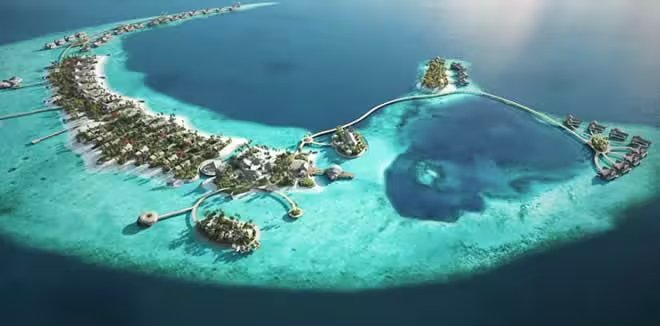
The Most Anticipated Openings in the Maldives 2025/26
Dive in to explore what makes these luxury Maldives openings 2025/26 so special
Read More
Maldives Liveaboards Guide: Itineraries, Tips & Best Boats
Plan your Maldives liveaboard trip with our expert guide! Compare itineraries, costs, and boats.
Read More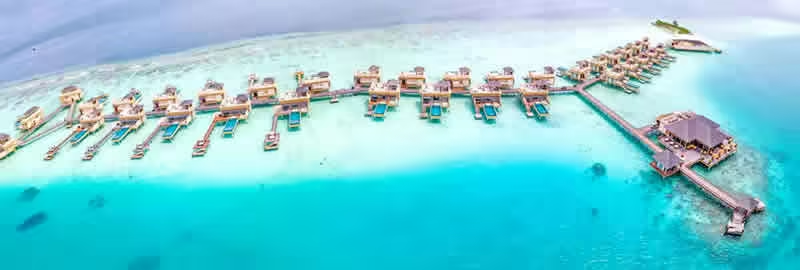
Maldives Luxury Guide
Here's the best of Maldives for luxury travellers. We've compiled the finest recommendations of places to stay, ranging from the most celebrated five-star resorts to luxurious private islands Read More

Maldives Romantic Guide
The ultimate ‘flop and drop' and honeymoon destination, the Maldives is the playground for the most amazing and finest utilization of each second of this extremely valuable and hopeful time with each other in tota Read More

Maldives Budget Guide
Budget travellers choose Maldives as their destination of choice thanks to the variety of affordable stays Read More

Maldives Family Guide
Maldives - a name that became synonymous with honeymooners' paradise in the tourism world, has slowly Read More

Maldives Diving Guide
The life of these paradise islands below the Indian Ocean's level is the main draw attracting thousands of divers Read More