
The Ultimate Guide to Laamu Atoll: Why This Maldivian Hidden Gem is a Model for Sustainable Tourism
Discovering Laamu Atoll's Unique Position in the Maldives
October, 2025
Nestled in the central southern region of the Maldives, Laamu Atoll represents a paradigm shift in sustainable tourism for this iconic archipelago. Unlike the more developed northern atolls, Laamu has maintained its authentic charm while pioneering environmental conservation and community-focused tourism initiatives. As the longest and largest island in the Maldives, Gan Island in Laamu Atoll offers a unique geographical advantage with its 18km road connecting multiple islands - a rare infrastructure feature in a nation where most islands stand alone . This unique connectivity allows visitors to explore multiple communities and ecosystems with minimal environmental impact, setting the stage for Laamu's emergence as a model of sustainable tourism that balances visitor experience with ecological preservation and cultural authenticity.
The atoll's commitment to sustainability isn't merely theoretical; it's woven into the very fabric of its tourism offerings. From marine conservation programs to sustainable agricultural training initiatives for local communities , Laamu demonstrates how tourism can become a force for positive environmental and social change. This comprehensive guide explores why Laamu Atoll deserves recognition not just as a beautiful destination, but as a blueprint for responsible tourism development in fragile ecosystems worldwide.


Why Laamu Atoll is Pioneering Sustainable Tourism in the Maldives
The Conservation-First Approach to Development
Laamu Atoll's tourism model fundamentally differs from conventional approaches through its embedded conservation ethics. Where other destinations retrofit sustainability measures, Laamu builds them into their foundational operations:
-
Marine Protected Areas: Designated zones where fishing and water activities are regulated to preserve marine biodiversity, allowing coral reefs and fish populations to thrive
-
Sustainable Fisheries Management: Implementation of traditional, low-impact fishing practices that maintain fish stocks while supporting local livelihoods
-
Waste Management Innovations: Comprehensive systems to minimize landfill waste, including recycling initiatives and programs to reduce single-use plastics across resorts and local islands
-
Renewable Energy Integration: Progressive shift toward solar and other renewable energy sources to reduce dependence on imported fuels, decreasing the carbon footprint of tourism operations
Community Engagement and Cultural Preservation
Beyond environmental measures, Laamu distinguishes itself through meaningful community involvement that ensures tourism benefits reach local residents:
-
Agricultural Training Programs: Initiatives like the "Awareness & Training on Sustainable Agricultural Practices in Laamu Atoll" empower local communities with skills for sustainable food production
-
Cultural Exchange Opportunities: Authentic interactions that allow visitors to learn about Maldivian traditions while providing economic opportunities for residents
-
Local Enterprise Support: Resorts and tour operators actively source products and services from local suppliers, creating a virtuous economic cycle that rewards sustainable practices
Experiencing Laamu Atoll: A Comprehensive Guide to Sustainable Attractions

Natural Wonders and Eco-Friendly Activities
Laamu Atoll offers visitors an array of low-impact experiences that showcase its natural beauty while minimizing environmental footprint:
-
The 18km Island-Linking Road: This extraordinary infrastructure allows for carbon-light exploration of multiple islands by bicycle or on foot. Visitors can experience diverse landscapes and communities without multiple boat transfers, significantly reducing their carbon emissions while gaining a more authentic understanding of the atoll's geography
-
Pareefengadu (The Fairy Pond): This hidden freshwater pond nestled amidst lush greenery represents the atoll's unique terrestrial ecosystems. The site is carefully managed to prevent overtourism, with visitors encouraged to follow designated paths and practice Leave No Trace principles to preserve its magical atmosphere
-
Marine Sanctuaries and House Reefs: The atoll's protected marine areas offer world-class snorkeling and diving with visibility often exceeding 30 meters. Responsible tour operators educate visitors about coral-safe practices and support monitoring programs that track reef health and marine biodiversity
-
Bird Watching and Nature Trails: Laamu's limited development has preserved crucial habitats for migratory and endemic bird species. Guided tours along designated trails provide opportunities to observe these creatures with minimal disturbance while supporting local conservation efforts
Cultural Encounters and Sustainable Dining
-
Local Island Visits: The atoll's unique connectivity enables meaningful cultural exchanges on local islands beyond resort enclaves. Visitors can engage with community-led tourism initiatives that share Maldivian traditions, crafts, and daily life while directly supporting local economies
-
Farm-to-Table and Sea-to-Table Experiences: Resorts and local restaurants increasingly source ingredients from sustainable local producers, including line-caught fish and organically grown produce. This approach reduces food miles while celebrating traditional Maldivian culinary heritage with a modern twist
-
Handicraft Cooperatives: Support women's cooperatives and local artisans practicing traditional crafts such as lacquer work, mat weaving, and rope making. These initiatives preserve cultural heritage while providing sustainable livelihood alternatives to resource-intensive industries

The Laamu Difference: How Sustainable Practices Create Better Experiences
Laamu's commitment to sustainability translates into tangible visitor benefits that elevate the travel experience beyond conventional tourism:
-
Enhanced Natural Beauty: Conservation measures ensure that visitors encounter pristine beaches, vibrant coral reefs, and crystal-clear waters - the very attractions that draw people to the Maldives
-
Authentic Cultural Connections: Unlike enclave resorts that isolate tourists from local life, Laamu's model facilitates meaningful interactions with Maldivian culture and communities
-
Exclusivity Without Elitism: Carefully managed visitor numbers create uncrowded experiences while distributing economic benefits more broadly across society
-
Purpose-Driven Travel: Visitors depart with the satisfaction that their tourism spending has supported environmental conservation and community wellbeing rather than degrading fragile ecosystems
Laamu Atoll's Sustainable Tourism Practices and Their Benefits
| Practice Category | Specific Initiatives | Visitor Experience Benefits |
|---|---|---|
| Marine Conservation | Marine protected areas, coral monitoring, sustainable fisheries | Healthier reefs for snorkeling, abundant marine life sightings |
| Community Development | Agricultural training , handicraft cooperatives, cultural tours | Authentic cultural interactions, unique shopping opportunities |
| Infrastructure Innovation | 18km connecting road , renewable energy projects | Multiple island exploration by bike, reduced noise and pollution |
| Waste Management | Plastic reduction, recycling programs, composting | Pristine beaches and landscapes, cleaner ocean for water sports |
Planning Your Sustainable Visit to Laamu Atoll
Best Times to Visit and Climate Considerations
Laamu Atoll enjoys a tropical monsoon climate with two primary seasons:
-
Dry Season (December-April): Characterized by lower rainfall and calmer seas, this period offers optimal conditions for diving, snorkeling, and beach activities. While this is the most popular visiting period, Laamu's focus on managed tourism means it rarely feels overcrowded
-
Wet Season (May-November): Brings occasional rainfall and stronger winds, particularly from June to August. Travel during this period supports more consistent year-round employment for tourism workers and often provides better value while still offering many good weather days for activities
Responsible Travel Tips for Laamu Visitors
Maximize your positive impact while minimizing your environmental footprint:
-
Choose Eco-Certified Accommodations: Select resorts and guesthouses with demonstrated sustainability credentials and transparent environmental policies
-
Support Local Businesses: Patronize locally-owned restaurants, tour operators, and shops to ensure your spending benefits the community
-
Practice Marine-Friendly Behavior: Use reef-safe sunscreen, avoid touching corals or marine life, and maintain appropriate distance from wildlife
-
Respect Cultural Norms: Dress modestly when visiting local islands beyond resort areas and ask permission before photographing residents
-
Minimize Plastic Waste: Bring a reusable water bottle and shopping bag; Laamu has initiatives to reduce single-use plastics but visitor cooperation enhances these efforts
-
Offset Your Carbon Footprint: Consider credible carbon offset programs to mitigate travel emissions, particularly long-haul flights
Transportation and Connectivity
Laamu Atoll balances accessibility with environmental considerations:
-
Domestic Flights: Regular services connect Velana International Airport to Kadhoo Airport (KDO) in Laamu, with flight times of approximately one hour
-
Efficient Transfers: Resorts typically coordinate boat transfers from Kadhoo Airport, with many operators transitioning to energy-efficient vessels to reduce emissions
-
Low-Impact Local Transport: The atoll's unique interconnected islands enable unprecedented walking and cycling opportunities between destinations , significantly reducing the need for motorized water transfers between experiences
The Future of Sustainable Tourism: Laamu's Ongoing Initiatives
Laamu Atoll continues to pioneer innovative approaches to sustainable tourism with several forward-looking initiatives:
-
Expanding Marine Protection: Plans to enlarge marine protected areas and implement more sophisticated monitoring systems using emerging technologies
-
Renewable Energy Transition: Accelerating the shift toward solar energy and exploring opportunities for ocean thermal energy conversion
-
Sustainable Agriculture Expansion: Building on existing training programs to increase local food production and reduce import dependency
-
Plastic Elimination Campaigns: Aggressive targets to eliminate single-use plastics throughout the atoll through business incentives and visitor education
-
Carbon Neutrality Goals: Several resorts are working toward carbon neutrality through energy efficiency, renewable energy, and verified offset programs
These initiatives position Laamu not merely as a sustainable tourism destination but as a living laboratory where new approaches to balanced tourism development are tested and refined for application elsewhere in the Maldives and beyond.
Conclusion: Laamu Atoll as a Blueprint for Tourism Done Right
Laamu Atoll represents a compelling alternative to conventional tourism development, demonstrating that environmental stewardship, community wellbeing, and economic viability can be mutually reinforcing rather than competing priorities. By choosing to visit Laamu, travelers do more than secure an unforgettable Maldivian experience; they participate in a model that redefines tourism's relationship with fragile ecosystems and local communities.
As the travel industry globally grapples with its environmental and social impacts, Laamu offers evidence that another way is possible - that destinations can welcome visitors while preserving their ecological integrity and cultural authenticity. This hidden gem challenges us to reconsider what constitutes true luxury in travel: not merely opulent amenities, but the privilege of experiencing spectacular natural environments that remain healthy and vibrant because of thoughtful stewardship.
Raa Atoll vs. Baa Atoll: Your 2025 GuideThe ultimate success of Laamu's model may well influence tourism development far beyond the Maldives, offering a blueprint for destinations worldwide seeking to balance economic opportunity with environmental responsibility and cultural preservation. In an era of increasing concern about overtourism and ecological degradation, Laamu Atoll stands as a beacon of hope and a demonstration that with creativity, commitment and collaboration, tourism can become a net positive force for people and planet alike.
Related Stories:
- Maldives Atolls and Islands Guide - Where to Go in The Maldives
- Haa Alif Atoll: The Remote Maldives Resort Escape You've Been Seeking
- Where is the Maldives Atolls? A Beginner's Guide
- Where Are the Maldives? A Guide to the Southern Gaafu Atolls
- Is the Maldives Sinking? The Complex Truth About Paradise's Future
- The Untouched Atoll: Why Choosing Meemu Over Male Made Our Maldives Trip
- The Other Maldives: Untouched Northern Atolls Adventure Guide

2025 Maldives Resort Trends: What’s New for Multi-Generational Travel?
New Openings & Multi-Generational Family Travel Guide
Read More
Best Maldives Resort Offers & Packages
Find out more about the most unparalleled Maldives hotel deals and special rates, when Book Direct your next beach holiday
Read More
Maldives Hotel Reviews
Some of the best hotels and resorts in the Maldives are already included in this list, and the good part of them offers the best prices. We will constantly add new hotels
Read More
Maldives First Time Visitor Guide: Essential Tips & Insight
Welcome to our comprehensive guide for first-time visitors to the Maldives!
Read More
The Most Anticipated Openings in the Maldives 2025/26
Dive in to explore what makes these luxury Maldives openings 2025/26 so special
Read More
Maldives Liveaboards Guide: Itineraries, Tips & Best Boats
Plan your Maldives liveaboard trip with our expert guide! Compare itineraries, costs, and boats.
Read More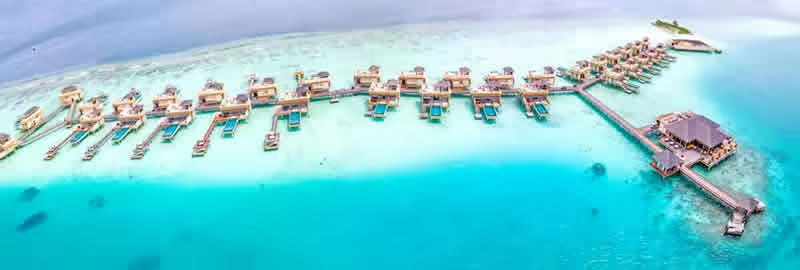
Maldives Luxury Guide
Here's the best of Maldives for luxury travellers. We've compiled the finest recommendations of places to stay, ranging from the most celebrated five-star resorts to luxurious private islands Read More
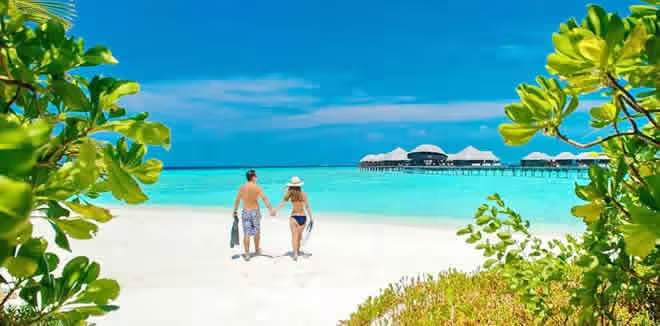
Maldives Romantic Guide
The ultimate ‘flop and drop' and honeymoon destination, the Maldives is the playground for the most amazing and finest utilization of each second of this extremely valuable and hopeful time with each other in tota Read More

Maldives Budget Guide
Budget travellers choose Maldives as their destination of choice thanks to the variety of affordable stays Read More

Maldives Family Guide
Maldives - a name that became synonymous with honeymooners' paradise in the tourism world, has slowly Read More

Maldives Diving Guide
The life of these paradise islands below the Indian Ocean's level is the main draw attracting thousands of divers Read More