
Photographing Giants: Technical Guide to Manta Ray and Whale Shark Photography in Hanifaru Bay
The Allure of Ocean Giants


November, 2025
Hanifaru Bay in the Maldives' Baa Atoll represents one of the planet's most extraordinary marine spectacles—a UNESCO Biosphere Reserve where manta rays and whale sharks gather in stunning numbers. During the southwest monsoon from May to November, plankton-rich waters create feeding frenzies that can attract dozens, even hundreds of mantas simultaneously, alongside the ocean's gentle giant, the whale shark. This technical guide provides photography enthusiasts with expert strategies for capturing these magnificent creatures while prioritizing their conservation through ethical practices.
Insider Tip: For the ultimate Hanifaru Bay experience, plan your visit between late July and early October when plankton concentrations peak, increasing your chances of witnessing the legendary "manta storm" phenomena where up to 200 individuals feed in synchronized harmony .


Essential Equipment for Pelagic Underwater Photography
Camera Systems: From Beginner to Professional
Choosing the right camera system depends on your experience level and budget, but all quality underwater photography requires specific approaches to capture these majestic creatures effectively .
Camera System Recommendations for Pelagic Photography
| Experience Level | Camera Type | Recommended Models | Best For |
|---|---|---|---|
| Beginner | Advanced Smartphone/Compact | Smartphone with housing like SeaTouch 4 Max, Olympus TG-6 | Wide-angle scenes, snorkeling, budget-conscious photographers |
| Intermediate | Mirrorless | Panasonic Lumix DC-G9 II, Sony A7 series | Excellent image quality with lighter weight, versatile shooting |
| Professional | DSLR/Mirrorless Pro | Sony A9 II, Canon EOS R5 | Ultimate image quality, fast action capture, commercial work |
The Sony A9 II stands out for pelagic photography with its extraordinary 20 frames per second continuous shooting and 693 phase-detection autofocus points covering 93% of the image area—essential for capturing fast-moving mantas in changing conditions .
Lenses and Optical Considerations
Wide-angle lenses are non-negotiable for capturing these ocean giants. The Tokina 10-17mm fisheye lens receives consistent praise from professional underwater photographers for its ability to capture expansive scenes and close-focus wide-angle shots, essential when a whale shark approaches within feet of your position .
For whale sharks and manta rays, wide-angle lenses between 10-20mm (full-frame equivalent) allow you to include the animal's full scale while maintaining context of their environment. The fisheye effect can be particularly effective for creating dramatic, immersive images that convey the grandeur of these creatures .
Critical Accessories: Housing, Lighting, and Stabilization
-
Underwater Housings: Invest in manufacturer-specific housings with proper O-ring seals and ergonomic controls. Test your housing before every dive to prevent leaks—saltwater and camera electronics create a disastrous combination .
-
Lighting Systems: Water absorbs colors progressively, with reds disappearing at just 10 meters depth. Use strobes or video lights with 5500K color temperature to restore natural colors. Position lights to the sides and slightly forward to minimize backscatter from suspended particles .
-
Buoyancy Control: Professional rigs become heavy and negatively buoyant. Use buoyancy arms and floats to achieve neutral buoyancy, allowing steady positioning without exhausting your arms during long dive sessions .

📸 Technical Camera Settings for Marine Giants
Mastering Manual Exposure
Shooting in manual mode provides consistent exposure despite changing conditions. For fast-moving subjects like feeding mantas, these settings deliver optimal results:
-
Shutter Speed: 1/250s or faster to freeze motion
-
Aperture: f/8-f/11 for sufficient depth of field
-
ISO: 400-800 (adjust based on available light)
-
White Balance: Manual setting at 5000-5500K or shoot RAW for post-processing
Expert Technique: When capturing motion blur for artistic effect—such as a manta's graceful movement—switch to shutter priority mode at 1/30s and pan with the subject. This creates a sharp subject against a blurred background, conveying fluid motion .
Advanced Autofocus Strategies
Modern mirrorless cameras offer sophisticated autofocus systems ideal for pelagic photography. For the Sony A9 II or similar professional bodies:
-
Use continuous tracking AF with face/eye detection where available
-
Employ zone focusing rather than single points for unpredictable movement
-
For whale sharks approaching head-on, back-button focus lets you lock focus and recompose without hunting
The Panasonic Lumix DC-G9 II offers excellent 5-axis in-body stabilization, crucial for handheld shooting in currents while maintaining sharpness at slower shutter speeds .

🐳 Ethical Practices for Responsible Marine Photography
Respectful Interaction Guidelines
No photo is worth endangering wildlife or their habitat. As ocean photographers, we have a responsibility to prioritize the wellbeing of these creatures above capturing the perfect shot .
-
Maintain respectful distance: Allow animals to control the interaction; never chase
-
Avoid flash photography: Sudden light can disorient or stress animals, particularly during feeding
-
Master buoyancy first: Perfect neutral buoyancy before adding camera equipment
-
Never touch or feed: Natural behaviors provide the most authentic photography opportunities
Discover Hanifaru BayConservation Insight: Hanifaru Bay operates under strict protection as part of the Baa Atoll Biosphere Reserve. Your entry fee contributes directly to conservation efforts—another reason to book through licensed, ethical operators who enforce these crucial guidelines .
Environmental Considerations
The marine environment presents unique challenges that require conscious practices:
-
Avoid coral contact: One fin kick can destroy decades of coral growth
-
Minimize disturbance: Approach slowly and avoid sudden movements
-
Respect local regulations: Follow all marine protected area rules and guide instructions
-
Lead by example: Demonstrate proper behavior to other divers and photographers
Mastering Composition for Impactful Imagery
Creative Framing Techniques
Shoot upward toward the surface to create striking silhouettes against the water's surface or sunbeams penetrating the depths. This technique emphasizes the animals' majestic scale while producing clean, uncluttered backgrounds .
Include human elements such as other divers to provide scale—a snorkeler alongside a whale shark dramatically conveys the animal's massive proportions. For mantas, capture their entire wingspan with room in the frame for their movement to feel unrestricted and natural .
Advanced Lighting Approaches
Side lighting reveals texture and dimension in manta rays' ventral patterns, which serve as unique identifiers similar to human fingerprints. Backlighting creates dramatic rim lighting effects, particularly effective when sunbeams filter through the water column .
For over-under (split level) shots, use a dome port and position the water line across the center. This technically challenging technique requires calm conditions but produces stunning images connecting the underwater and surface worlds .

🤿 Hanifaru Bay Specific Considerations
Seasonal Timing and Ocean Conditions
The southwest monsoon (May-November) creates the plankton-rich conditions that attract mantas and whale sharks to Hanifaru Bay. However, the "manta season" peaks from late July through early October when sightings become most reliable .
Plan for at least 7-10 days on location to account for variable ocean conditions that affect visibility and animal sightings. Even during peak season, mantas may not enter the bay daily, so building flexibility into your schedule increases opportunities for optimal shooting conditions .
Maldives Seasonal Guide for MegafaunaLocation-Specific Photography Strategies
Hanifaru Bay's unique topography creates a natural funnel where currents concentrate plankton—and the creatures that feed on them. Position yourself downcurrent from the feeding action, allowing animals to approach you rather than pursuing them .
The bay is primarily a snorkeling location rather than scuba diving site, as bubbles can disturb feeding animals. Practice free diving skills to capture images from various depths while respecting the animals' space .
Post-Processing and Workflow
Efficient Editing Techniques
Shoot in RAW format to maximize flexibility in adjusting white balance—crucial for correcting the blue color cast prevalent in underwater photography. Use applications like UWACAM for efficient color correction, or manually adjust temperature and tint sliders in Lightroom or Capture One .
Develop a consistent preset that addresses common underwater color issues, then fine-tune for specific conditions. Reduce haze and increase contrast to combat the "milky" appearance caused by light scattering from water particles.
Ethical Editing Standards
While post-processing can enhance images, maintain authentic representation of scenes and animals. Avoid:
-
Excessive manipulation that misrepresents animal behavior or size
-
Adding or removing marine life from compositions
-
Altering backgrounds to create false scenarios
Today's audience values authenticity—minor imperfections often prove an image's legitimacy and the photographer's integrity.
Conclusion: Conservation Through Photography
The privilege of photographing these ocean giants carries responsibility. Your images can inspire conservation awareness and support for marine protection when created ethically. By following these technical guidelines while prioritizing animal welfare, you contribute to sustainable tourism practices that ensure future generations can experience the awe of swimming with manta rays and whale sharks.
As you prepare for your Hanifaru Bay adventure, remember that the most compelling photographs often come from patience and respect rather than technical prowess alone. The ocean rewards those who listen as much as look, who observe as much as shoot. May your images reflect not only the beauty of these creatures but their right to thrive in a healthy, protected marine environment.
❓ Frequently Asked Questions
What's the single most important piece of equipment for Hanifaru Bay photography?
A wide-angle lens (10-17mm range) is essential for capturing these large animals while maintaining image quality and context. This recommendation appears consistently across professional underwater photography guides .
How can I protect my camera gear while traveling to the Maldives?
Never check underwater housings or strobes—use carry-on only. Utilize your personal item allowance for camera bodies and lenses. Know airline lithium battery policies, and consider a photographer's vest for redistributing weight if facing strict carry-on limits .
Are there specific regulations for Hanifaru Bay photography?
Yes. Hanifaru Bay has strict rules: maintain safe distances from marine life, no touching or feeding animals, no flash photography that might disturb natural behaviors, and payment of conservation fees that support the protected area .
What if the water visibility is poor during my visit?
Even with reduced visibility, you can capture artistic shots emphasizing patterns, close interactions, or black-and-white conversions. Use the conditions creatively rather than focusing solely on classic blue-water scenes .
How do I balance getting great shots with ethical practices?
Prioritize animal welfare first—observe without camera initially, let marine life approach you, and remember that no photo is worth stressing these creatures. The most ethical encounters often produce the most natural, compelling imagery .
Related Stories:
- Manta Ray Maldives Liveaboard: Guaranteed Hanifaru Bay Encounters
- Swim with Whale Sharks Maldives & Manta Ray Season Meemu Atoll 2025 Guide
- Best Resorts to Swim with Whale Sharks & Manta Rays in Maldives
- Macro Diving in the Maldives: A Hidden World of Tiny Marvels
- The 10 Most Amazing Places for Travel Photo in Maldives
- The Ultimate Maldives Photography Guide for First-Timers: From Drones to Underwater Shots
- Instagram-Worthy Spots: Most Photogenic Places and Scenic Views in Maldives
- For first timers: Underwater Photography tips and techniques

2025 Maldives Resort Trends: What’s New for Multi-Generational Travel?
New Openings & Multi-Generational Family Travel Guide
Read More
Best Maldives Resort Offers & Packages
Find out more about the most unparalleled Maldives hotel deals and special rates, when Book Direct your next beach holiday
Read More
Maldives Hotel Reviews
Some of the best hotels and resorts in the Maldives are already included in this list, and the good part of them offers the best prices. We will constantly add new hotels
Read More
Maldives First Time Visitor Guide: Essential Tips & Insight
Welcome to our comprehensive guide for first-time visitors to the Maldives!
Read More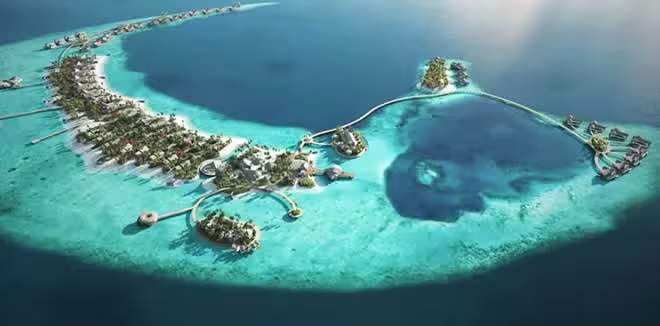
The Most Anticipated Openings in the Maldives 2025/26
Dive in to explore what makes these luxury Maldives openings 2025/26 so special
Read More
Maldives Liveaboards Guide: Itineraries, Tips & Best Boats
Plan your Maldives liveaboard trip with our expert guide! Compare itineraries, costs, and boats.
Read More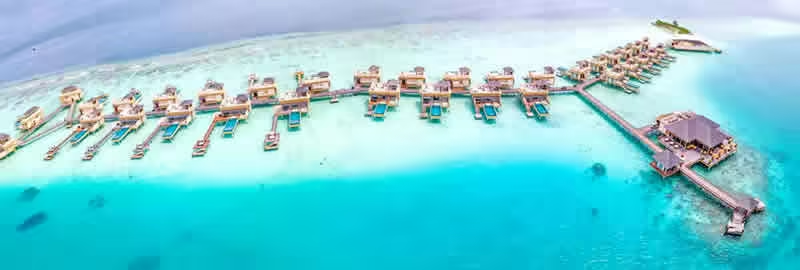
Maldives Luxury Guide
Here's the best of Maldives for luxury travellers. We've compiled the finest recommendations of places to stay, ranging from the most celebrated five-star resorts to luxurious private islands Read More

Maldives Romantic Guide
The ultimate ‘flop and drop' and honeymoon destination, the Maldives is the playground for the most amazing and finest utilization of each second of this extremely valuable and hopeful time with each other in tota Read More
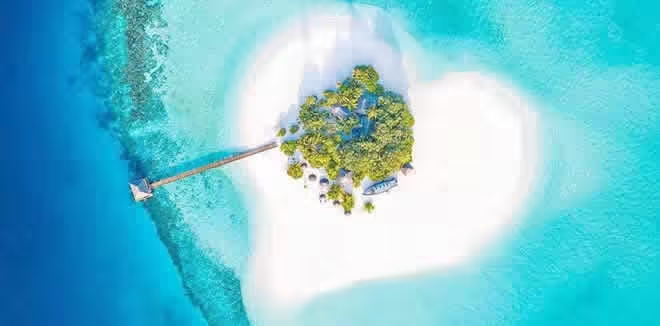
Maldives Budget Guide
Budget travellers choose Maldives as their destination of choice thanks to the variety of affordable stays Read More

Maldives Family Guide
Maldives - a name that became synonymous with honeymooners' paradise in the tourism world, has slowly Read More

Maldives Diving Guide
The life of these paradise islands below the Indian Ocean's level is the main draw attracting thousands of divers Read More