
JA Manafaru in Low Season: What It’s Really Like Visiting During the “Rainy” Months
An honest, guest-driven look at the Maldives’ northernmost luxury resort when the skies open up—and why some travelers still swear by it.
The Question Every Planner Asks


June, 2026
You’ve done the research. You’ve seen the photos—turquoise water, powder-white sand, overwater villas stretching into infinity. JA Manafaru looks like paradise. But then you check the calendar. May. June. September. The “low season.” The rainy months.
And you wonder: Is it worth it?
The short answer: It depends on what you’re looking for. The longer answer requires a honest look at what actually happens when the southwest monsoon arrives at the Maldives’ northernmost resort—and why some guests still return year after year, rain or shine.


Understanding the Season: What “Low Season” Actually Means
The Maldives experiences two distinct monsoon periods. The southwest monsoon—locally known as Hulhangu—runs from May through September, bringing higher humidity, occasional rain showers, and stronger winds. The northeast monsoon (Iruvai) delivers the dry, calm conditions from December through February that most people picture when they imagine a Maldivian holiday.
JA Manafaru sits in the Haa Alifu Atoll, the northernmost atoll in the Maldives. Interestingly, this region experiences the least amount of rainfall in the entire archipelago. But “least” doesn’t mean “none.”
One guest who visited in May/June put it plainly: “Weather is likely to be rougher compared to February/March (more rain and wind equal more swell and cloudier waters), so you have to accept that—nothing the team on Manafaru island can do about it—even though, if they could, they would.”
That acceptance—making peace with the possibility of rain—is the first and most important step.
Northern or Southern Maldives: Best Time to VisitThe Reality: What Happens When the Rain Comes
The Good
Let’s start with what works—because for many guests, low season delivers an experience that high season simply can’t match.
Fewer People, More Privacy
Low season at JA Manafaru means significantly lower occupancy. One reviewer noted that during their stay, “the hotel was running at full capacity with maximum number of guests but nowhere ever looked busy.” In low season, that feeling of solitude intensifies. Another guest described it as “feeling like you were on an island with hardly a soul on it. So calm and peaceful.”
Lower Prices, Better Value
The numbers speak for themselves. Low season room rates start from around $600 per night—significantly cheaper than comparable properties near Malé. The resort frequently runs promotions, including complimentary seaplane transfers for stays of seven nights or more during the low season period.
Lush, Vibrant Landscapes
The rain that falls during the southwest monsoon does exactly what rain is supposed to do: it makes things grow. The island’s vegetation becomes “lush green” and “mature,” with “beautiful natural canopy” providing shade and creating a more intimate, private atmosphere. One guest called the island “drowned in tropical greenery—palm trees, exotic plants and flowers create the feeling of a living garden.”
The Staff Still Shine
Multiple reviewers emphasize that the service at JA Manafaru remains exceptional regardless of the weather. “What truly sets JA Manafaru apart are the people that make every aspect of your stay so much more enjoyable—from the gardener that greets you at 6am on your way to the gym, to the restaurant staff that will happily move another table onto the beach.” Rain doesn’t dampen the warmth of the team.
The Challenging
But let’s be honest: low season comes with real trade-offs. And some guests have had genuinely disappointing experiences.
The Water Villa Risk
The most consistent criticism during low season centers on the overwater villas—specifically the 200-series villas on the southern side of the island. Multiple reviewers describe these villas taking “a brutal beating from the waves” during storms.
One guest wrote: “Total inconsistency, rain every day and thunder and lightning most with huge sea swell both at night and during the day… We found the noise seriously distressing, as was the resulting lack of sleep. I was OK most days, my wife just didn’t sleep at all.”
Another reviewer reported that “parts of our villa came loose during the storms and floated away” and that “the wooden deck, neglected for almost two weeks, became grimy, and the plunge pool was full of sand.”
Some repeat visitors have adapted by switching to beach villas entirely during low season. “We met repeat visitors who claimed they would never stay in a water villa again and were staying now in Beach Villas.”
Snorkeling Can Be Disappointing
The house reef—one of JA Manafaru’s key attractions—can be significantly affected by rough seas. An avid snorkeler who visited in low season noted: “Poor viz would affect it because most of the reef is quite deep.” Another reviewer was more direct: “The snorkeling was mediocre—not many fish, and the waves were large.”
One guest who visited in both high and low seasons concluded: “IMO in High Season it’s probably a better experience but for low season I wouldn’t choose the island if snorkelling was my thing.”
The Bar Experience
When rain hits, the outdoor bars lose their appeal. “The Ville bar seemed pointless… the seats outside are left soaking wet if it’s just rained, unfortunately there is no atmosphere at all inside or out.”
🏝️🏝️🏝️🤔💬 Comparing JA Manafaru to other Maldives resorts? See why 7-time visitors call it the best. An honest review of service, food, villas & value.
JA Manafaru vs. Other Maldives ResortsThe Silver Lining: Why Some Guests Still Prefer Low Season
Despite these challenges, many guests actively choose low season—and return year after year.
The Weather Often Cooperates
Rain in the Maldives rarely means all-day downpours. One guest who visited in September described: “We were so lucky with beautiful weather everyday… So calm and peaceful.” Another noted: “Periodic rains and a light breeze brought comfort to the stay. They gave us the opportunity not to burn, but to get a nice sea tan.”
A reviewer who visited during a transitional period shared: “It rained a bit but the weather was really nice. The temperature was great, comfortable and not too humid.”
The Magic of the Staff
Perhaps the most powerful argument for visiting in any season is the team. One reviewer who visited during rough weather wrote: “Once you have made your peace with that, every other aspect of your stay will shine and sparkle even brighter and indulge you in what makes this destination so very special.”
The Food Stays Exceptional
The culinary experience doesn’t take a seasonal dip. One guest who visited in September raved: “The food across all six restaurants was genuinely good and varied enough that I never felt bored during five nights.” Another low-season visitor called the cuisine “exquisite,” noting that “every meal was beautifully prepared and genuinely impressive.”
What the Experts Say
The consensus from seasoned travelers and experts:
-
For snorkeling enthusiasts: High season (December–April) delivers better visibility and calmer seas.
-
For budget-conscious travelers: Low season offers significant savings and fewer crowds.
-
For those seeking privacy: Low season’s lower occupancy means more space and solitude.
-
For water villa lovers: Be prepared for potential noise and wave action—or book a beach villa instead.
One travel expert summarized it simply: “The wet season brings occasional rain showers and higher humidity… However, it’s still possible to visit, and this season offers lush green landscapes, fewer tourists, and lower prices.”
Practical Tips for Low Season Travel
If you’re considering a low-season visit to JA Manafaru, here’s what experienced guests recommend:
1. Choose Your Villa Wisely
Avoid the 200-series water villas on the southern side during stormy months. Request a villa on the northern side or consider a beach villa for more stability.
2. Book the All-Inclusive Plan
Most guests recommend the AI package, but be aware that “the list of excluded items is getting longer, so this is something to watch out for.” Review the menus before you go.
3. Pack Accordingly
Bring noise-canceling headphones if you’re in a water villa. Pack light layers for occasional rain. And don’t forget your snorkeling gear—rentals are available, but personal equipment ensures the best fit.
4. Manage Expectations
As one guest wisely advised: “Once you have made your peace with that, every other aspect of your stay will shine and sparkle even brighter.” The key to enjoying low season is accepting that the weather is beyond anyone’s control.
5. Embrace the Experience
Low season at JA Manafaru offers something high season can’t: a quieter, more intimate connection with the island. “We originally went to the Maldives for the turquoise waters and the whitest of white sands, but we are coming back for the people.”
The Bottom Line
JA Manafaru in low season is not for everyone. If pristine snorkeling conditions and guaranteed sunshine are non-negotiable, book between December and April.
But if you value privacy, lower prices, lush landscapes, and the warmth of an exceptional team—and you’re willing to accept that the weather might not cooperate every single day—low season at JA Manafaru can deliver an experience that’s every bit as magical as the postcards suggest.
As one guest who visited during the rainy months put it: “We left feeling grateful for the experience—and especially for the people who made it so memorable.”
Sometimes, paradise is even more beautiful when it rains.
👉 Planning a trip to JA Manafaru? Check the resort’s current promotions—complimentary seaplane transfers are often available for stays of seven nights or more during the low season period.
Check Availability and PricesRelated Stories:
- Maldives Weather Secrets: How to Avoid Monsoon Disappointments on Your First Trip
- The Monsoon Season No One Told You About: Maldives in June – Honest Low‑Season Review
- Beyond Paradise: Why June is the Smart Luxury Traveler’s Secret to a Deeper Maldives
- Best Time to Go to Maldives: Month-by-Month Weather & Events Guide

2025 Maldives Resort Trends: What’s New for Multi-Generational Travel?
New Openings & Multi-Generational Family Travel Guide
Read More
Best Maldives Resort Offers & Packages
Find out more about the most unparalleled Maldives hotel deals and special rates, when Book Direct your next beach holiday
Read More
Maldives Hotel Reviews
Some of the best hotels and resorts in the Maldives are already included in this list, and the good part of them offers the best prices. We will constantly add new hotels
Read More
Maldives First Time Visitor Guide: Essential Tips & Insight
Welcome to our comprehensive guide for first-time visitors to the Maldives!
Read More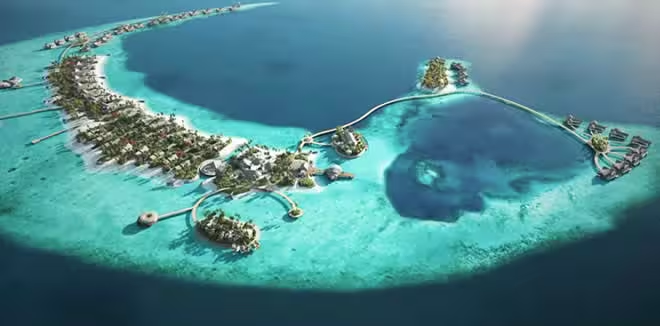
The Most Anticipated Openings in the Maldives 2025/26
Dive in to explore what makes these luxury Maldives openings 2025/26 so special
Read More
Maldives Liveaboards Guide: Itineraries, Tips & Best Boats
Plan your Maldives liveaboard trip with our expert guide! Compare itineraries, costs, and boats.
Read More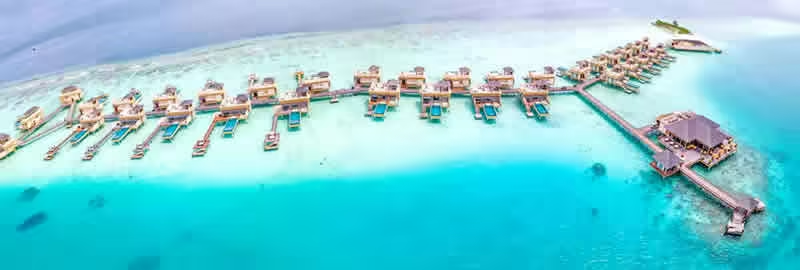
Maldives Luxury Guide
Here's the best of Maldives for luxury travellers. We've compiled the finest recommendations of places to stay, ranging from the most celebrated five-star resorts to luxurious private islands Read More
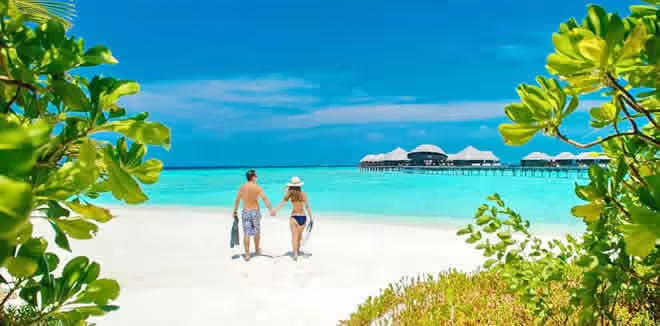
Maldives Romantic Guide
The ultimate ‘flop and drop' and honeymoon destination, the Maldives is the playground for the most amazing and finest utilization of each second of this extremely valuable and hopeful time with each other in tota Read More

Maldives Budget Guide
Budget travellers choose Maldives as their destination of choice thanks to the variety of affordable stays Read More

Maldives Family Guide
Maldives - a name that became synonymous with honeymooners' paradise in the tourism world, has slowly Read More

Maldives Diving Guide
The life of these paradise islands below the Indian Ocean's level is the main draw attracting thousands of divers Read More