
Anantara Dhigu Maldives Resort Partners with rrreefs on an Innovative 3D-Printed Clay Reef Restoration Project
Beneath the tranquil waters of the South Malé Atoll, a quiet revolution is taking root.



16 June, 2026
While the Maldives is synonymous with overwater villas and turquoise luxury, the true magic lies just below the surface. Recognizing the fragility of these underwater ecosystems, Anantara Dhigu Maldives Resort has announced a groundbreaking collaboration with rrreefs, a Swiss deep-tech organization, to install an innovative 3D-printed clay reef installation within the resort’s surrounding lagoon.
Supported by Edelweiss Air (a member of the Lufthansa Group) and help alliance, this project represents a meaningful leap forward in marine conservation and regenerative travel experiences.
The "Theyra Maa" Installation: Where Nature Meets Technology
At the heart of this initiative lies a stunning feat of engineering and design. The project features 13 flower-shaped clay reef structures, locally named Theyra Maa—Dhivehi for "13 Flowers."
Why flowers? The geometry is purely scientific. Unlike traditional concrete blocks, these 3D-printed clay modules are designed to mimic the complex micro-habitats of natural reefs.
-
Symbolism: Renewal, growth, and the flourishing of marine life.
-
Material: Fired terracotta clay (primary), steel, and minimal concrete for integrity.
-
Water Dynamics: The flower shape creates gentle water movement, helping coral larvae settle more effectively without being swept away.
"We designed the Theyra Maa reef structures using durable and sustainable materials," said Mauro Bischoff, the visionary behind the project. "The 3D-printed clay also features a unique microstructure with tiny cavities... providing sheltered spaces where young coral larvae can attach and grow while being protected from predators."
The Science of Porosity: Why Clay Beats Concrete
Traditional reef restoration often struggles with artificial structures that fail to integrate biologically. The rrreefs approach solves this through micro-scale engineering.
According to Marine Ecologist Dr. Julia Spaet and Dr. Gerrit Nanninga (Ludwig Maximilian University of Munich), the success lies in the clay's porosity.
-
Biofilm Formation: The rough, porous surface encourages the growth of beneficial biofilms (the "good" bacteria that reefs need to thrive).
-
Predator Protection: The tiny cavities between print layers act as nurseries for juvenile fish and coral polyps, hiding them from predators until they are strong enough to survive on their own.
A Cross-Industry Partnership for Ocean Resilience
This installation is particularly notable as it marks rrreefs' first direct collaboration with a resort.
"This partnership with rrreefs is particularly exciting," said Oriana Migliaccio, Resident Marine Biologist at Anantara Dhigu. "Opportunities like this are still relatively rare. We are proud to work alongside rrreefs and our partners to support coral reef recovery."
The project is sponsored by Edelweiss and help alliance, reinforcing the Lufthansa Group's commitment to environmental stewardship beyond aviation.
"Protecting natural ecosystems and creating educational opportunities are closely connected," said Anja Trestl of Edelweiss. "We want to contribute to lasting positive change for both people and nature."
Regenerative Travel: What This Means for Guests
For travelers, this is not a "look but don't touch" conservation effort. Guests staying at Anantara Dhigu, as well as its sister properties Anantara Veli and Naladhu Private Island, will have the opportunity to engage with this initiative.
Regenerative travel goes beyond sustainability (minimizing harm) to active restoration (leaving a place better than you found it).
"At Anantara, we believe luxury and sustainability should exist in harmony," said Jason Kruse, Complex General Manager. "Through innovation, collaboration and purposeful action, we hope to inspire greater awareness and lasting positive impact beneath the surface."
The Bigger Picture: Fighting Coral Decline
Coral reefs are among the first ecosystems at risk from climate change. Rising ocean temperatures cause bleaching, while ocean acidification weakens skeletal structures.
Josephine Graf, Co-Founder of rrreefs, notes: "The inspiration behind rrreefs comes from a deep passion for the ocean and a determination to take meaningful action against the rapid decline of coral reefs."
By combining marine science, engineering, and regenerative design, the Theyra Maa installation aims to prove that high-tech solutions can work in harmony with nature to rebuild the resilience of fragile reef ecosystems for future generations.
Key Takeaways for Eco-Conscious Travelers
-
What is it? A series of 13 3D-printed clay flower structures designed to restore coral reefs.
-
Where? Anantara Dhigu Maldives Resort, South Malé Atoll.
-
Why it matters: Uses natural terracotta clay and micro-cavities to increase coral larvae survival rates by up to 300% compared to bare rock.
-
Who is involved? Anantara, rrreefs, Edelweiss Air (Lufthansa Group), and LMU Munich.
Frequently Asked Questions (FAQ)
Q: How long will it take for the 3D-printed reef to become a living reef?
A: Initial coral settlement can begin within weeks, but a fully functioning ecosystem with diverse marine life typically takes 12 to 24 months to establish fully.
Q: Is 3D-printed clay safe for the ocean?
A: Yes. Fired terracotta clay is chemically inert, has a neutral pH, and is non-toxic. It does not leach chemicals like some concrete or metal structures can.
Q: Can guests participate in the restoration?
A: Guests can learn about the project through the resident Marine Biologist at Anantara Dhigu. It offers a unique educational opportunity to see high-tech conservation in action via snorkeling tours of the lagoon.
Related pages:
- How Baros Maldives Guests Are Reviving Coral Reefs: A 1973 vs. 2025 Journey
- From Shipwreck to Living Reef: Siyam World Launches Wreck to Reef, an Annual Ocean Conservation Initiative
- Constance Moofushi & Mars Sustainable Solutions: Coral Reef Restoration in Maldives
- Diving in South Malé Atoll
- 10 Best Eco-Friendly Resorts in Maldives for Sustainable Luxury
- Most Popular Maldives Resorts for Divers



2025 Maldives Resort Trends: What’s New for Multi-Generational Travel?
New Openings & Multi-Generational Family Travel Guide
Read More
Best Maldives Resort Offers & Packages
Find out more about the most unparalleled Maldives hotel deals and special rates, when Book Direct your next beach holiday
Read More
Maldives Hotel Reviews
Some of the best hotels and resorts in the Maldives are already included in this list, and the good part of them offers the best prices. We will constantly add new hotels
Read More
Maldives First Time Visitor Guide: Essential Tips & Insight
Welcome to our comprehensive guide for first-time visitors to the Maldives!
Read More
The Most Anticipated Openings in the Maldives 2025/26
Dive in to explore what makes these luxury Maldives openings 2025/26 so special
Read More
Maldives Liveaboards Guide: Itineraries, Tips & Best Boats
Plan your Maldives liveaboard trip with our expert guide! Compare itineraries, costs, and boats.
Read More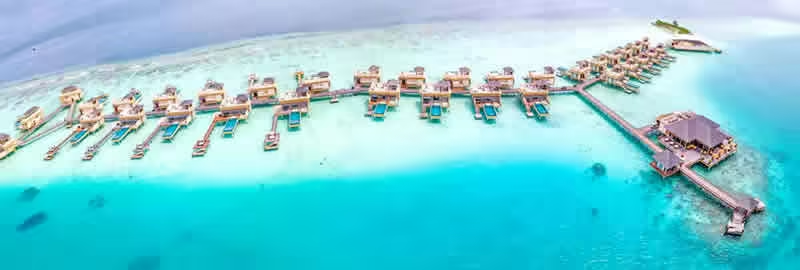
Maldives Luxury Guide
Here's the best of Maldives for luxury travellers. We've compiled the finest recommendations of places to stay, ranging from the most celebrated five-star resorts to luxurious private islands Read More
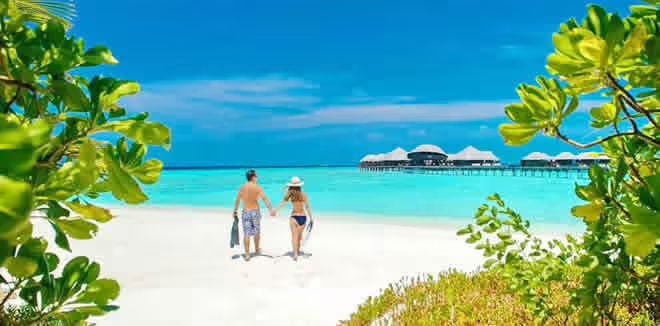
Maldives Romantic Guide
The ultimate ‘flop and drop' and honeymoon destination, the Maldives is the playground for the most amazing and finest utilization of each second of this extremely valuable and hopeful time with each other in tota Read More
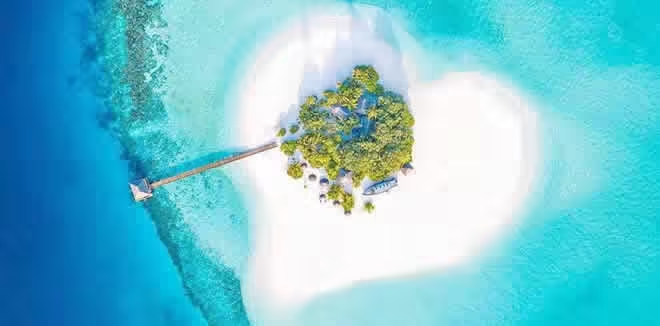
Maldives Budget Guide
Budget travellers choose Maldives as their destination of choice thanks to the variety of affordable stays Read More
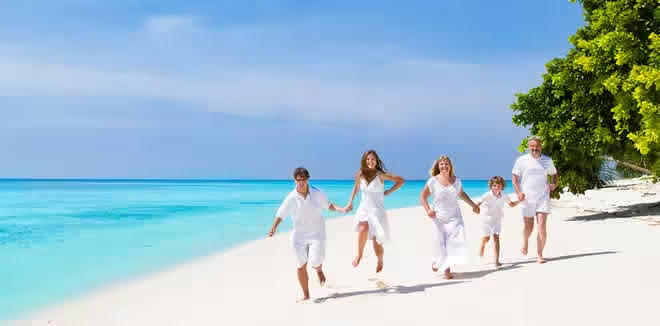
Maldives Family Guide
Maldives - a name that became synonymous with honeymooners' paradise in the tourism world, has slowly Read More

Maldives Diving Guide
The life of these paradise islands below the Indian Ocean's level is the main draw attracting thousands of divers Read More