
Maldives to Lift 15-Year Shark Fishing Ban in November
Maldives Scuba Diving Guide





30 August, 2025
The Maldives implemented a complete ban on shark fishing in March 2010, following increasingly strict restrictions that had been in place since 1998. The original moratorium was established after studies showed that revenue from diving tourism surpassed earnings from shark oil exports.
Before the ban, shark fishing ranked as the second-most important fishery in the Maldives after tuna, which remains the nation's primary export earner. Interestingly, Maldivians do not consume shark meat domestically—instead, the fishery primarily supported the export of shark liver oil to international markets.
The ban was celebrated by environmental organizations and helped cement the Maldives' reputation as a global shark sanctuary, contributing to its image as a premier ecotourism destination
The New Policy: What's Changing?
Come November 2025, the Maldives will reopen its gulper shark fishery under what President Muizzu describes as a "comprehensive management plan" and "comprehensive regulation plan". The announcement was made during a gathering on Kulhudhuffushi Island in the Haa Dhaalu Atoll, which has historically been the largest gulper shark fishery in the Maldives.
The Ministry of Fisheries and the Ministry of Environment have already examined the matter, though specific details of the management plan have not been fully disclosed to the public. The decision represents a notable policy shift, as fisheries authorities had previously signaled no intent to reverse the ban, citing studies and sustainable practices.

Economic Motivations Behind the Decision
The primary driver behind lifting the ban appears to be economic diversification for coastal communities. President Muizzu has described the gulper shark fishery as "a significant source of income" and "a very important door" for economic development.
The decision comes as the Maldives seeks to strengthen revenue streams beyond tourism, which has likely faced pressures in recent years. With a population of approximately 500,000 people spread across 1,192 islands, economic opportunities are limited, and the government appears to be prioritizing income generation for fishing communities.
Shark liver oil has historically been one of the country's key export commodities, and the government seems interested in recapturing this market while maintaining its tuna fishing operations.
Economic Factors Behind the Decision
| Factor | Description | Potential Impact |
|---|---|---|
| Revenue Diversification | Reducing reliance on tourism by reviving historical export industry | Additional income streams for fishing communities |
| Export Earnings | Shark liver oil previously ranked second only to tuna in marine exports | Improved trade balance through exported commodities |
| Employment Opportunities | Creating jobs in fishing sector for coastal communities | Reduced unemployment in outer atolls |
| Tourism Alternatives | Developing economic activities beyond tourism | More resilient economic model |
Environmental Concerns and Risks
Conservation groups have expressed significant alarm at the policy reversal. The UK-based organization Shark Guardian has been particularly vocal, warning that the move could undermine the Maldives' reputation as a marine sanctuary and threaten the long-term health of the nation's tourism-dependent economy.
The environmental concerns are multifaceted:
-
Keystone Species Impact: Sharks serve as critical components of marine ecosystems, and their removal can disrupt delicate ecological balances.
-
Biodiversity Loss: Overfishing could diminish the remarkable marine biodiversity that makes the Maldives unique.
-
Tourism Value Erosion: Dive tourism relies heavily on shark sightings, and diminished populations could reduce the destination's appeal.
-
Climate Vulnerability: As a low-lying nation already threatened by rising sea levels, additional pressure on marine ecosystems could heighten the Maldives' environmental vulnerability.
The Gulper Shark: Species in Focus
The reopening specifically targets the gulper shark (likely referring to species in the genus Centrophorus), which has historically been the major export through its liver oil. These deep-water sharks are particularly valued for their liver oil, which is rich in squalene—a compound used in cosmetics, pharmaceuticals, and nutritional supplements.
Gulper sharks are generally slow-growing and have low reproductive rates, making them particularly vulnerable to overfishing. The specific management measures that will protect these species under the new fishery plan have not been detailed in the announcements, raising concerns about potential population declines.
Tourism Industry Implications
The Maldives is world-renowned for its luxury resorts and diving centers, with shark sightings being a significant attraction for visitors. The potential impact on tourism represents a critical consideration in the policy change.
Before the 2010 ban, income from tourism—particularly diving—had already surpassed revenue from shark oil exports, which was the original motivation for implementing protections. The reversal now creates tension between immediate economic gains from fishing and long-term tourism revenue.
Industry stakeholders have not been prominently featured in the initial reports, suggesting that tourism operators may have limited influence in this particular policy decision compared to fishing interests.
International Response
The international community has begun reacting to the announcement, with conservation organizations expressing the most significant concerns. Shark Guardian, a UK-based shark and marine conservation group, has been particularly vocal in its opposition, calling the move "deeply troubling".
The policy change may also affect the Maldives' international reputation as a conservation leader and vocal advocate for addressing climate change and marine protection. How this decision will impact the country's standing in global environmental forums remains to be seen.
The international media coverage has been balanced, with outlets reporting both the government's economic rationale and conservationists' concerns.
Looking Ahead: Implementation Challenges
As November approaches, several implementation challenges loom:
-
Management Plan Details: The success of the fishery reopening will heavily depend on the specific measures included in the management plan, which haven't been fully detailed publicly.
-
Enforcement Capacity: Ensuring compliance with regulations will require significant monitoring and enforcement capabilities.
-
Market Considerations: The global market for shark products has likely changed during the 15-year ban, requiring market analysis and development.
-
Ecological Monitoring: Assessing the impact on shark populations will require robust scientific monitoring and adaptive management strategies.
-
Balance with Tourism: Developing approaches that minimize negative impacts on the tourism industry will be crucial.
Potential Impacts of Lifting the Ban
| Aspect | Short-Term Impact | Long-Term Impact |
|---|---|---|
| Fishing Communities | Increased income opportunities | Potential depletion of resource if not managed properly |
| Marine Ecosystem | Minimal immediate impact | Possible decline in shark populations and biodiversity loss |
| Tourism Industry | Likely minimal immediate impact | Potential decline if shark sightings become less reliable |
| International Reputation | Criticism from conservation groups | Possible loss of status as marine conservation leader |
Conclusion
The Maldives' decision to lift its 15-year ban on shark fishing represents a complex intersection of economic pressure, environmental conservation, and sustainable development challenges. While the move promises short-term economic benefits for fishing communities, it risks undermining the very natural resources that support the nation's luxury tourism industry—its primary economic engine.
The November implementation will be watched closely by conservationists, fishing communities, and tourism operators alike. The ultimate success of this policy shift will depend on the government's ability to implement effective management that balances extraction with conservation, ensuring that shark populations remain healthy enough to support both fishing and tourism in the years to come.
As a nation on the frontline of climate change impacts, the Maldives faces difficult choices between immediate economic needs and long-term environmental sustainability. How this balance is struck in the case of shark fishing may set an important precedent for other resource-dependent nations facing similar challenges worldwide.
Related stories
- Liveaboard Special Offers, Last Minute Deals
- Maldives enforces stricter regulations for whale shark conservation
- Inside Netflix 'All the Sharks': Why Fuvahmulah is the Ultimate Shark Island
- Sharks in the Maldives
- Shark Diving Maldives: Untouched Northern Atolls & Secret Sites
- 5 Eco-Tourism Experiences in the Maldives
- Marine Life of the Maldives


Scuba Diving in the Maldives
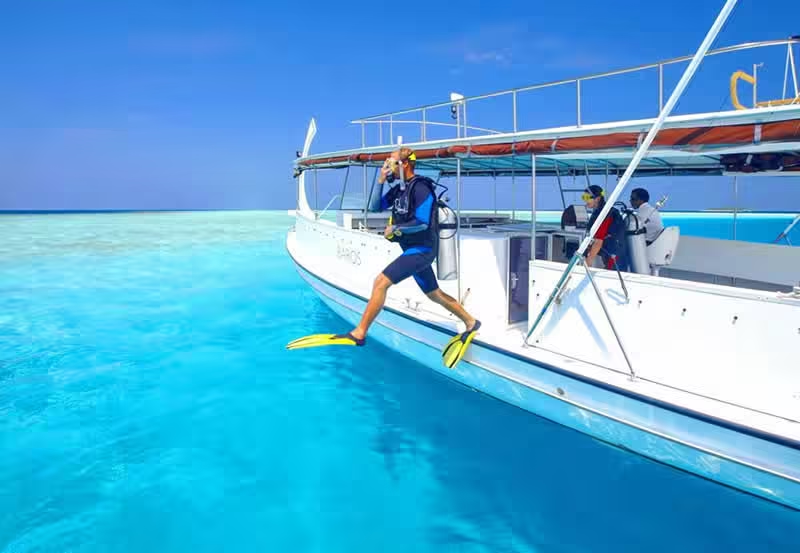
Scuba diving in the Maldives means diving at one of the worlds best scuba diving destinations, because of the white sand beaches, coral reefs, clear warm waters, dive sites and a thriving and vibrant marine life. Explore excellent dive sites and a collection of underwater gardens. They're abundant with extensive coral reefs and magnificent fish life. It's common to see sharks, turtles, manta rays, whale sharks and a kaleidoscopic range of tropical sea creatures.
Read More
2025 Maldives Resort Trends: What’s New for Multi-Generational Travel?
New Openings & Multi-Generational Family Travel Guide
Read More
Best Maldives Resort Offers & Packages
Find out more about the most unparalleled Maldives hotel deals and special rates, when Book Direct your next beach holiday
Read More
Maldives Hotel Reviews
Some of the best hotels and resorts in the Maldives are already included in this list, and the good part of them offers the best prices. We will constantly add new hotels
Read More
Maldives First Time Visitor Guide: Essential Tips & Insight
Welcome to our comprehensive guide for first-time visitors to the Maldives!
Read More
The Most Anticipated Openings in the Maldives 2025/26
Dive in to explore what makes these luxury Maldives openings 2025/26 so special
Read More
Maldives Liveaboards Guide: Itineraries, Tips & Best Boats
Plan your Maldives liveaboard trip with our expert guide! Compare itineraries, costs, and boats.
Read More
Maldives Luxury Guide
Here's the best of Maldives for luxury travellers. We've compiled the finest recommendations of places to stay, ranging from the most celebrated five-star resorts to luxurious private islands Read More

Maldives Romantic Guide
The ultimate ‘flop and drop' and honeymoon destination, the Maldives is the playground for the most amazing and finest utilization of each second of this extremely valuable and hopeful time with each other in tota Read More

Maldives Budget Guide
Budget travellers choose Maldives as their destination of choice thanks to the variety of affordable stays Read More

Maldives Family Guide
Maldives - a name that became synonymous with honeymooners' paradise in the tourism world, has slowly Read More

Maldives Diving Guide
The life of these paradise islands below the Indian Ocean's level is the main draw attracting thousands of divers Read More