
Inside Netflix 'All the Sharks': Why Fuvahmulah is the Ultimate Shark Island
Scuba Diving in The Maldives





06 July, 2025
Move over, Bora Bora. Forget the usual atolls. A remote Maldivian island named Fuvahmulah has exploded into the global spotlight, thanks to its starring role in the premiere episode of Netflix's thrilling new competition series, "All the Sharks." But this isn't just reality TV escapism.
The show shines a powerful light on a place recently validated by science as hosting the world's largest documented aggregation of tiger sharks – a revelation making waves in both conservation and adventure travel circles
Fuvahmulah: More Than Just a Dramatic Backdrop – A Shark Science Hotspot
Long revered by hardcore divers as "Shark Island" for its guaranteed encounters, Fuvahmulah's significance is now cemented by rigorous research. A landmark peer-reviewed study published in Nature.com, led by Lennart Vossgaetter of the Leibniz Centre for Tropical Marine Research, used non-invasive photo identification over six years to make a stunning discovery: 239 individual tiger sharks were documented frequenting Fuvahmulah's waters – the highest number ever recorded in a single, confined marine area globally.
-
Why Here? The study pinpointed Fuvahmulah's unique geography – influenced by strong oceanic currents and lacking a surrounding atoll – as creating an ideal reproductive habitat. Crucially, it found adult female tiger sharks exhibit strong "site fidelity," meaning they return and stay for extended periods, particularly during gestation, drawn by the warm, food-rich waters.
-
A Conservation "Bright Spot": Researchers hail Fuvahmulah as a critical bright spot for tiger shark conservation in the Indian Ocean, significantly bolstered by the Maldives' nationwide shark sanctuary status enacted in 2010.
Inside the "All the Sharks" Premiere: Shark Island Showdown
Netflix's "All the Sharks" drops viewers straight into the deep end. The first episode, aptly titled "Eye of the Tiger Shark," unfolds entirely on Fuvahmulah 3. Hosted by the charismatic and eccentrically bearded marine biologist Tom "The Blowfish" Hird, the show pits four expert teams against each other in a race to photograph the most shark species across six global locations.
-
The Teams: Shark Docs (marine biologists Brendan & Chris), Gills Gone Wild (spearfisher/shark diver MJ & marine biologist/ray expert Aliah), British Bait Off (underwater cameraman Dan & environmental journalist Sarah), and Land Sharks (wildlife biologist Randy & ecologist/apex predator specialist Rosie).
-
The Challenge: Teams have limited time to photograph sharks. The rarer the species, the higher the points. The season's winning team earns $50,000 for a marine conservation charity.
-
Fuvahmulah Tactics: The premiere highlights a key strategic dilemma. Tiger sharks, while iconic and abundant here, are worth only 3 points due to their common presence. The elusive Pelagic Thresher shark, however, lurking in deeper waters, commands a whopping 75 points.
-
Teams like Land Sharks and Gills Gone Wild gamble on deep dives chasing the high-scoring Thresher.
-
Others, like Shark Docs, opt to start shallow, racking up points with more frequent, lower-value sightings.
-
The British Bait Off seeks a reef drop-off hoping for a mix. Their moment surrounded by tiger sharks, met with excitement rather than fear ("Sounds like points!"), encapsulates the show's awe-driven approach.
-
-
Cinematic Showcase: Beyond the competition, the episode serves as a breathtaking visual love letter to Fuvahmulah's underwater realm, showcasing its crystal waters and, of course, its majestic tiger shark residents.
Shark Point Values in "All the Sharks" - Fuvahmulah Episode Example
| Shark Species | Estimated Points Value (Based on Rarity) | Why the Point Value? | Likely Dive Strategy |
|---|---|---|---|
| Pelagic Thresher Shark | 75 points | Extremely rare, deep-water species | High-risk deep dives |
| Tiger Shark | 3 points | Abundant (world's largest aggregation) | Shallow focus, quantity strategy |
| Other Reef Sharks | 10-25 points (estimated) | Moderately common but less abundant than tigers | Mixed depth approach |
Beyond the Spectacle: Conservation Concerns Take Center Stage
While celebrating Fuvahmulah's ecological wonder, the scientific study cited alongside the show's release sounds a vital note of caution. The explosive growth of shark tourism at Fuvahmulah's "Tiger Harbour" presents significant challenges.
-
The Regulation Gap: Shark provisioning (attracting sharks for viewing) and diving activities currently operate without official national regulations or standardized safety and environmental guidelines in the Maldives. Existing codes of conduct are voluntary and vary between dive centers.
-
Risks of Unchecked Tourism: Researchers warn this lack of management could jeopardize shark welfare (through potential disruption of natural behaviors or dependency) and threaten the long-term viability of the tourism industry itself.
-
A Call for Sustainable Models: The study points to successful community-managed Marine Protected Areas (MPAs) in places like Fiji as a blueprint. It strongly recommends implementing similar inclusive stakeholder management plans for Fuvahmulah. This would balance the undeniable economic benefits for the local community with essential ecological sustainability.
Fuvahmulah Tiger Shark Tourism - Opportunities vs. Challenges
| Aspect | Opportunity | Challenge | Recommendation |
|---|---|---|---|
| Tourism Growth | Major economic boost for | Rapid, unregulated expansion | Develop national standards & carrying capacity studies |
| Shark Provisioning | Enables reliable sightings for tourists | Potential behavioral changes, dependency | Science-based guidelines, limited feeding times |
| Dive Operations | High demand for unique tiger shark encounters | Lack of safety/environmental standards | Mandatory codes of conduct, operator certification |
| Long-Term Vision | Global model for sustainable shark tourism | Risk of ecosystem damage & industry collapse | Implement community-led MPA like Fiji's model |
Why Fuvahmulah's Netflix Moment Truly Matters
The convergence of global entertainment via Netflix and groundbreaking science creates a pivotal moment for Fuvahmulah and shark conservation.
-
Shifting the Narrative: Premiering 50 years after "Jaws," "All the Sharks" actively works to transform fear into fascination and appreciation. The show incorporates educational graphics detailing shark biology and conservation status.
-
Global Spotlight: The Netflix platform places Fuvahmulah firmly on the world stage for marine tourism and conservation. As Fuvahmulah City Mayor Ismail Rafeeg stated on Facebook, this exposure is a "huge opportunity" to attract "divers, adventurers, and nature lovers from around the world," crediting local dive centers and guesthouses for building this world-class destination.
-
A Catalyst for Action: The combined attention amplifies the urgent call for responsible management. It provides leverage and visibility for implementing the science-backed recommendations for sustainable tourism practices.
-
Proving Conservation's Value: The show demonstrates that living sharks are vastly more valuable (ecologically and economically through tourism) than sharks killed for fins or meat. The $50,000 charity prize underscores this.
Experiencing Fuvahmulah's Magic Responsibly
Inspired by the show? Here’s what potential visitors should know:
-
The Destination: Fuvahmulah is the southernmost atoll in the Maldives, about 500 km from Male. It boasts unique geography (a single island, not a typical atoll ring) and features like the pebble beach "Thoondu".
-
Getting There: Accessed via daily scheduled flights from Male with Maldivian airlines.
-
Staying There: Accommodation ranges from local guesthouses to dedicated liveaboard dive boats focusing on shark diving. Development is growing but retains a more local feel than resort islands.
Fuvahmulah Hotels
-
Diving There: Multiple dive centers operate near Tiger Harbour. Be prepared for strong currents – this is advanced diving. Tiger sharks are the star, but other species like gray reef sharks, hammerheads, and the elusive thresher are possible.
-
Diving Responsibly: Choose operators committed to best practices. Ask about their code of conduct regarding shark interactions, provisioning (if used), and environmental policies. Support businesses advocating for sustainable regulations. Remember, you are visiting a critical habitat, not just a TV set.
The Bottom Line: Sanctuary, Not Just Spectacle
Netflix "All the Sharks" does more than entertain. Its stunning Fuvahmulah premiere, backed by compelling science, reveals an island that is both an unparalleled underwater spectacle and a globally significant sanctuary for tiger sharks. The show offers a powerful platform to educate millions about shark conservation. However, it also highlights the fragile balance between ecotourism benefits and potential ecological costs.
The true success of this "Shark Island" moment will be measured not just in viewer numbers, but in whether it galvanizes the implementation of sustainable, science-based management to ensure Fuvahmulah's tigers – and the community that depends on them – thrive for generations to come. As the research urges, the time for action is now: to protect, regulate, and preserve this unique corner of the Maldives.
Realated pages
- Tiger Sharks Diving in Fuvahmulah
- Where was 'Love in the Maldives' filmed?
- Sun Siyam Olhuveli Maldives and Guraidhoo island are official filming locations for 'High Road, Low Road' the grand finale of Season 4
- Top 5 Dive Sites for Thrill Seekers in Lhaviyani Atoll
- The World's Best Places to Dive With Hammerhead Sharks


Fuvahmulah
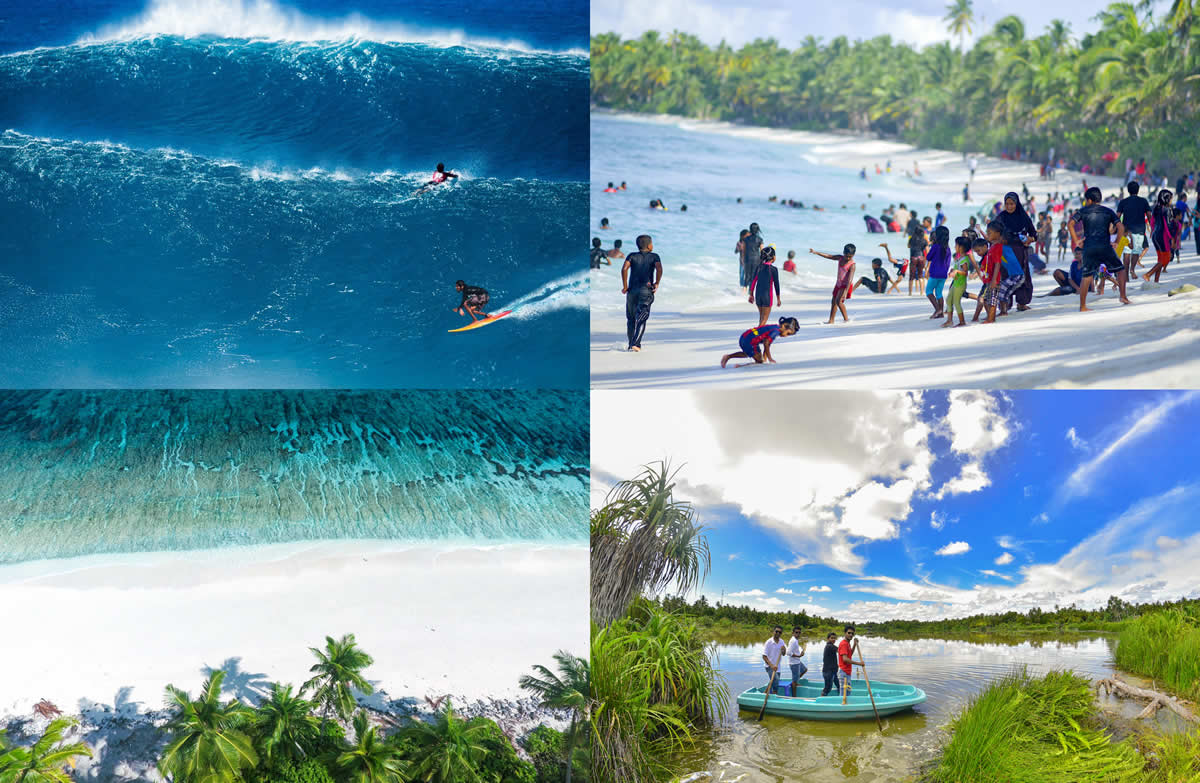
Best place to dive with sharks, Fuvahmulah is an island-atoll in the Maldives. Located on the equator between the two southern atolls of Addu and Huvadhu, Fuvahmulah is the unique and most beautiful island in the country - it is rock in the middle of open ocean. Unlike the two thousand islands of the Maldives archipelago, which are coral reefs, Fuhvamulah is of volcanic origin, which makes it more similar to the Indonesian islands of Bali or Gili. With lush tropical vegetation, mango landscapes, coconut palms, papaya plantations and various kinds of flowers, Fuwamulah is the only island in the Maldives with freshwater lakes.
Learn More
2025 Maldives Resort Trends: What’s New for Multi-Generational Travel?
New Openings & Multi-Generational Family Travel Guide
Read More
Best Maldives Resort Offers & Packages
Find out more about the most unparalleled Maldives hotel deals and special rates, when Book Direct your next beach holiday
Read More
Maldives Hotel Reviews
Some of the best hotels and resorts in the Maldives are already included in this list, and the good part of them offers the best prices. We will constantly add new hotels
Read More
Maldives First Time Visitor Guide: Essential Tips & Insight
Welcome to our comprehensive guide for first-time visitors to the Maldives!
Read More
The Most Anticipated Openings in the Maldives 2025/26
Dive in to explore what makes these luxury Maldives openings 2025/26 so special
Read More
Maldives Liveaboards Guide: Itineraries, Tips & Best Boats
Plan your Maldives liveaboard trip with our expert guide! Compare itineraries, costs, and boats.
Read More
Maldives Luxury Guide
Here's the best of Maldives for luxury travellers. We've compiled the finest recommendations of places to stay, ranging from the most celebrated five-star resorts to luxurious private islands Read More

Maldives Romantic Guide
The ultimate ‘flop and drop' and honeymoon destination, the Maldives is the playground for the most amazing and finest utilization of each second of this extremely valuable and hopeful time with each other in tota Read More
Maldives Budget Guide
Budget travellers choose Maldives as their destination of choice thanks to the variety of affordable stays Read More

Maldives Family Guide
Maldives - a name that became synonymous with honeymooners' paradise in the tourism world, has slowly Read More

Maldives Diving Guide
The life of these paradise islands below the Indian Ocean's level is the main draw attracting thousands of divers Read More